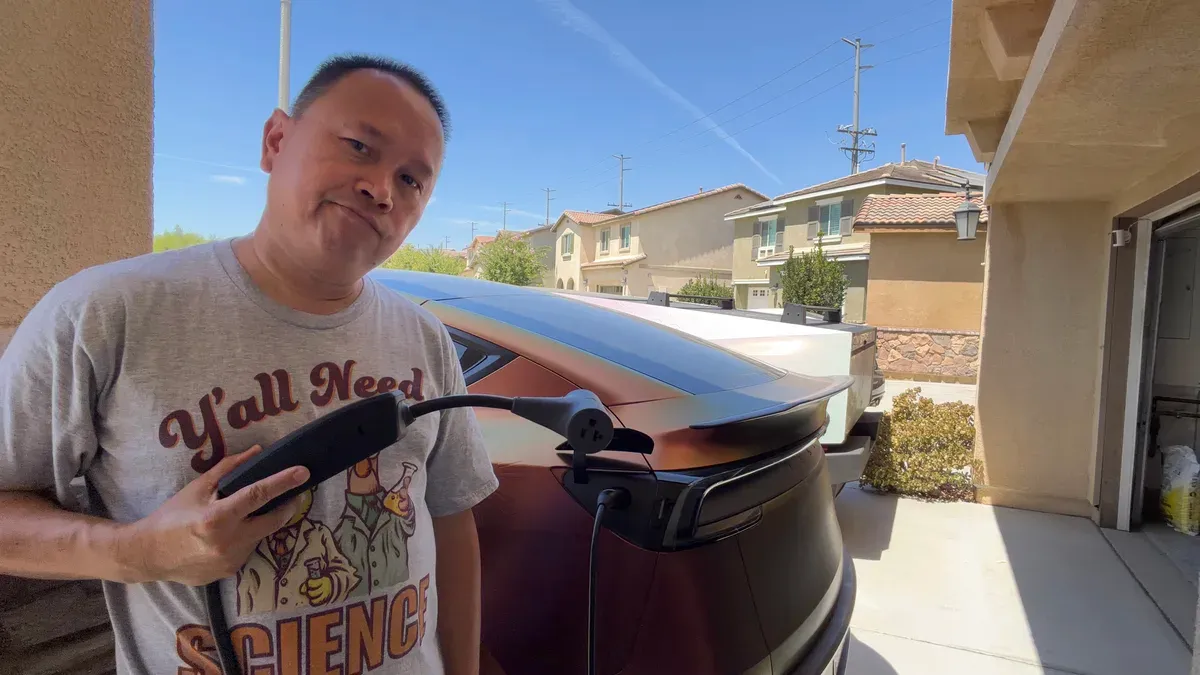
Tesla announced that the Model Y Juniper Premium can do V2L, so I bought the $80 Outlet Adapter to try it. It doesn’t work on my car. The reason has nothing to do with the trim I ordered, and you can’t see it from the driver’s seat.
I used Tesla referral points to buy the adapter, so thank you to everyone who used my Tesla referral link. That is what pays for stuff like this.
What the Tesla Outlet Adapter actually is
It is not an outlet in the car. It is a fitting that clips onto the far end of the Gen 3 Mobile Connector while the handle sits in the charge port. You get two 120V outlets, one on each end of the head. They share a ceiling of 2.4 kW, which is 2,400 watts at up to 20 amps.
You can tell a 20 amp outlet by the horizontal slot next to the vertical one. Standard 15 amp outlets only have the vertical slots. I put a 20 amp circuit in my shed for a server rack, so I know that one. Your normal 15 amp plugs still fit.
2,400 watts is real power. It is also one budget shared across both outlets. A space heater or a kettle pulls about 1,500 watts by itself. Add a coffee maker and you’ve tripped it.
Tesla lists three compatible vehicles: Model Y Premium, Model Y Performance, and Cybertruck. Model Y Standard is not on the list, and no Model 3 is either.
The Mobile Connector update almost nobody mentions
I spent a whole morning in the heat with this thing not working, on two different cars. I watched other videos. Nobody covered the part that was actually wrong.
I charge at home on a Wall Connector. This was the first time I had ever opened the Mobile Connector that came with the Juniper. Some smart folks in a chat group told me the cable needed a firmware update. The only way to update it is to plug it in and charge.
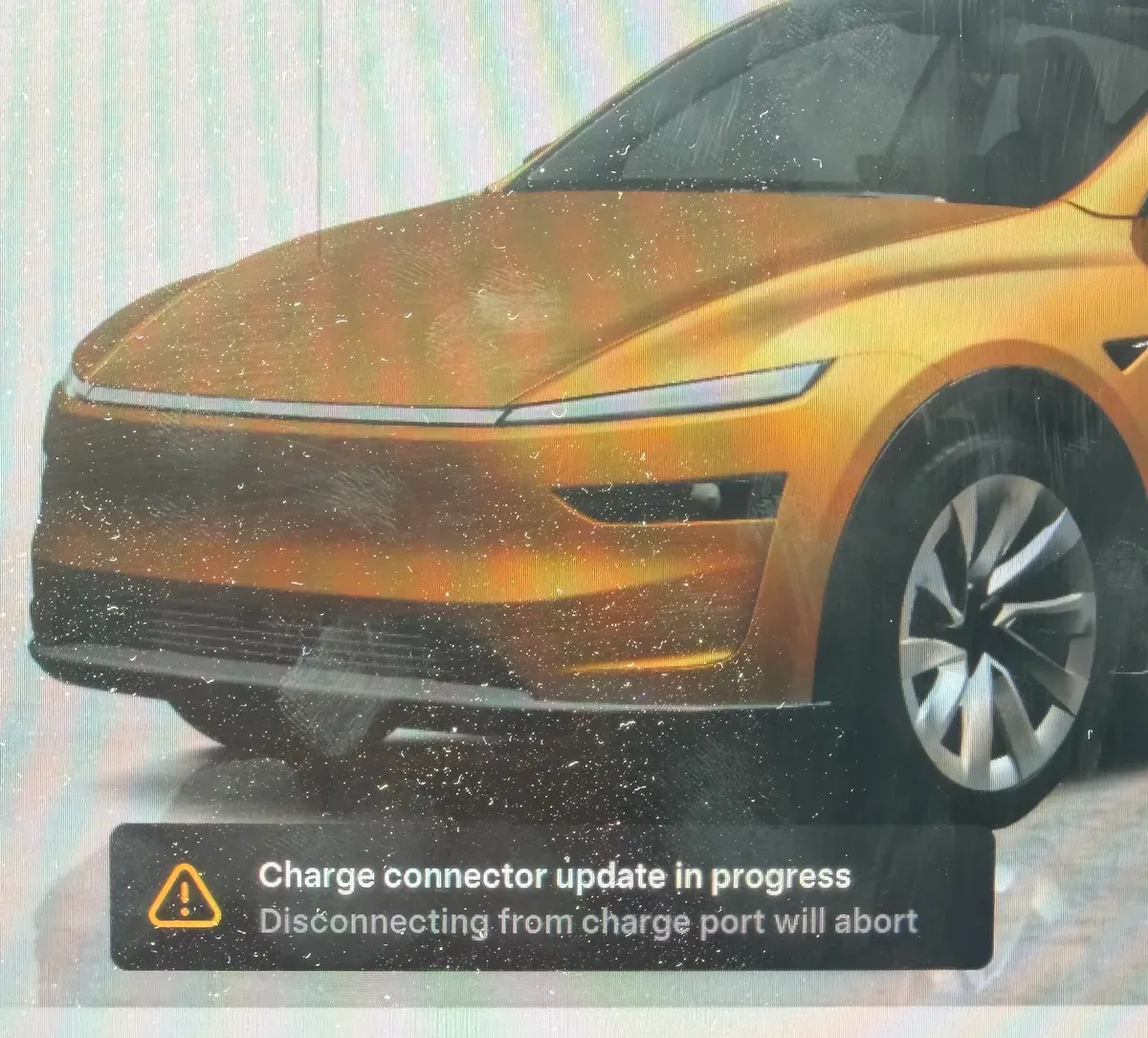
So I plugged it into the Model Y and waited. About five or six minutes in, charging stopped. I thought the cable was dead. I almost unplugged it. The app never says an update is running. You only see it on the car screen: “Charge connector update in progress. Disconnecting from charge port will abort.”
If you just bought this adapter and it does nothing, charge with the Gen 3 cable first and let it update. That is the free fix.
It worked on the Cybertruck in under a minute
On the Cybertruck it lit up immediately. I expected purple and got a blinking green. The app already read PowerShare enabled. I didn’t press a thing. I boiled an electric kettle off it. One odd part: PowerShare kept reading zero kilowatts while the water was clearly heating.
Then I moved it to the Model Y. No green light on the cable, none on the adapter, nothing. The screen said “Unable to charge. Charge station not powered.” The car is on the latest software. I turned on Keep Accessory Power On. There is nothing under Controls or Service to enable. The Cybertruck needed none of that, so this is not a setting.
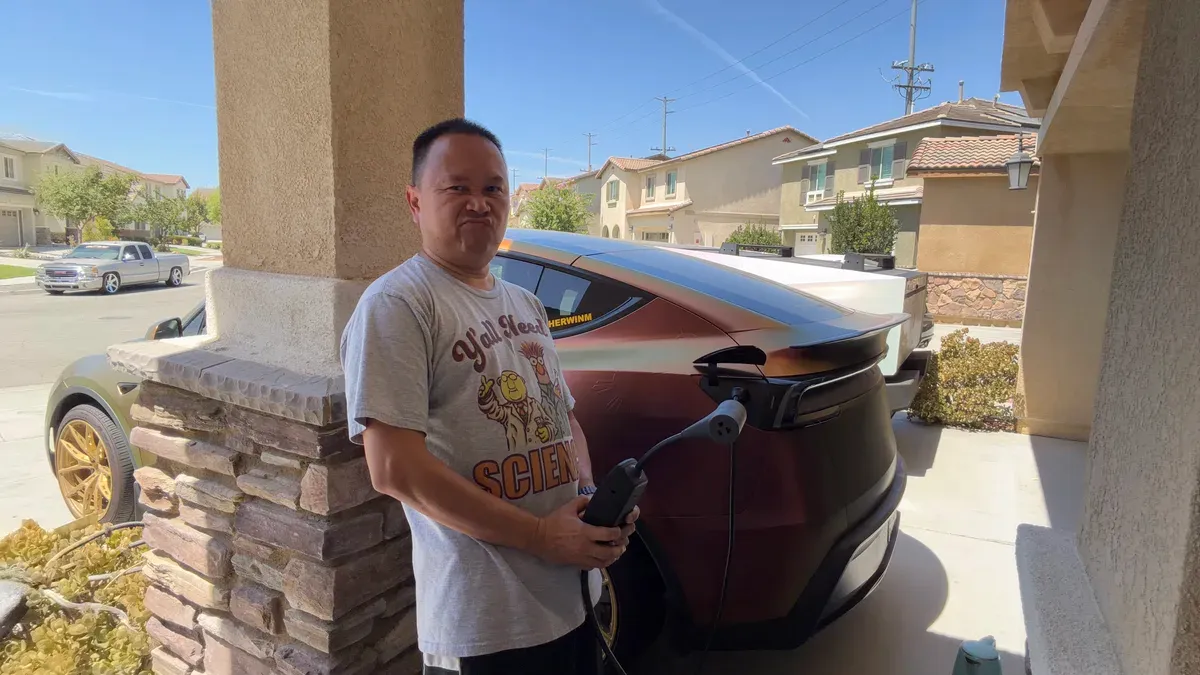
Same cable, same adapter, same driveway. One car does it and the other one doesn’t.
The real gate is a part called the PCS
There are two hardware requirements, not one. The Gen 3 Mobile Connector is the easy one. The other is the Power Conversion System, and only the newer PCS2 can push power back out.
You can check yours in about ten seconds. Sign in to the Tesla Parts Catalog, enter your VIN, and search “assembly power conversion”. Two results come back.
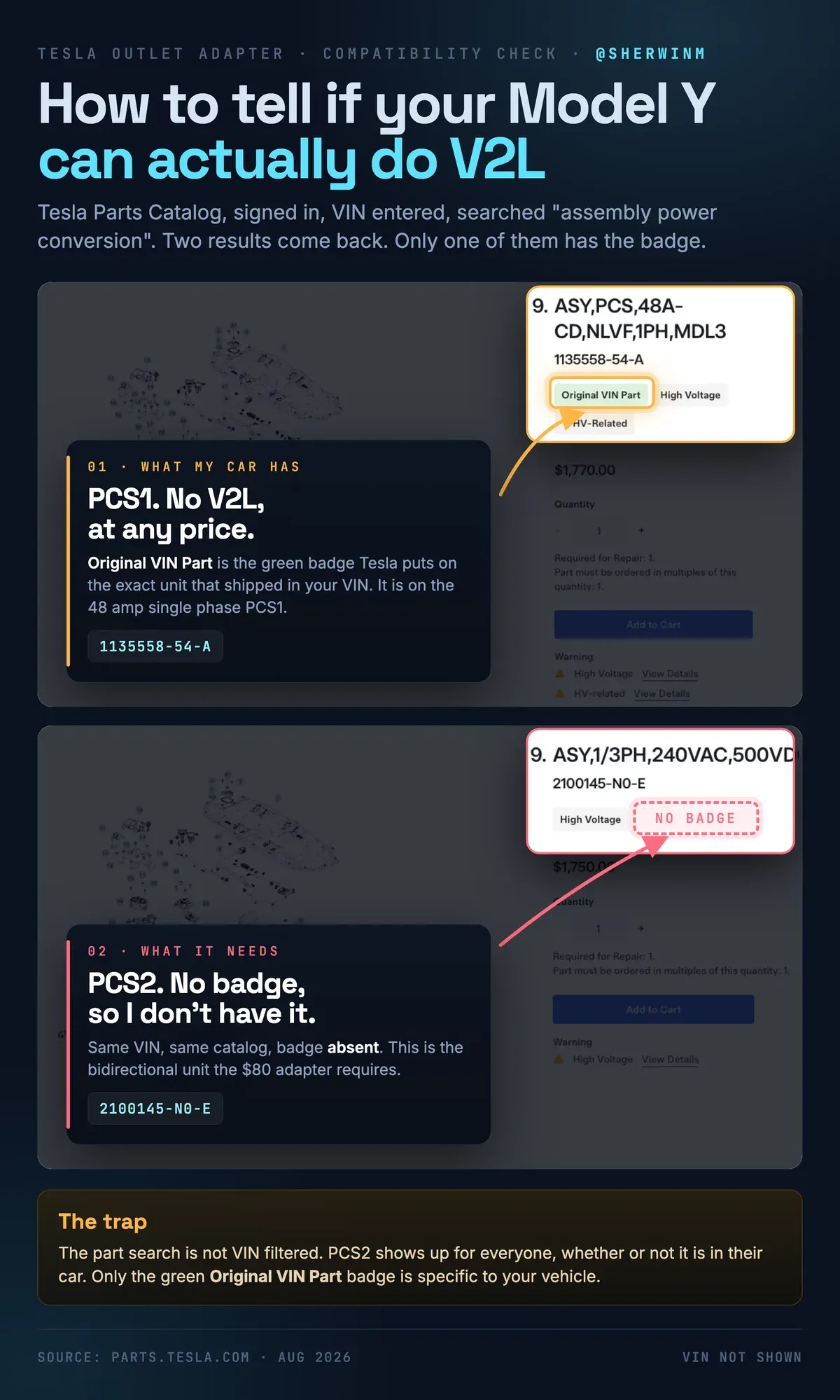
Here is the trap, and it is the most useful thing in this post. That search is not filtered by your VIN. PCS2 comes up for everybody, in the car or not. The only VIN specific thing on that page is the green “Original VIN Part” badge. Whichever unit carries the badge is the one you own.
On my VIN the badge sits on PCS1, part 1135558-54-A, the 48 amp single phase unit. So my Juniper can’t do V2L at all. The $80 adapter was never going to work on it. I checked twice, and none of the PCS2 side parts carry the badge either.
Build date is not a reliable guide here. Coverage of the launch points at a rough cutoff, and owners report May cars failing with June going either way. Tesla has not published a date. Check the badge instead of counting months.
About that retrofit number
In the video I told you not to retrofit because it is $1,700. That number is wrong and I want to correct it here.
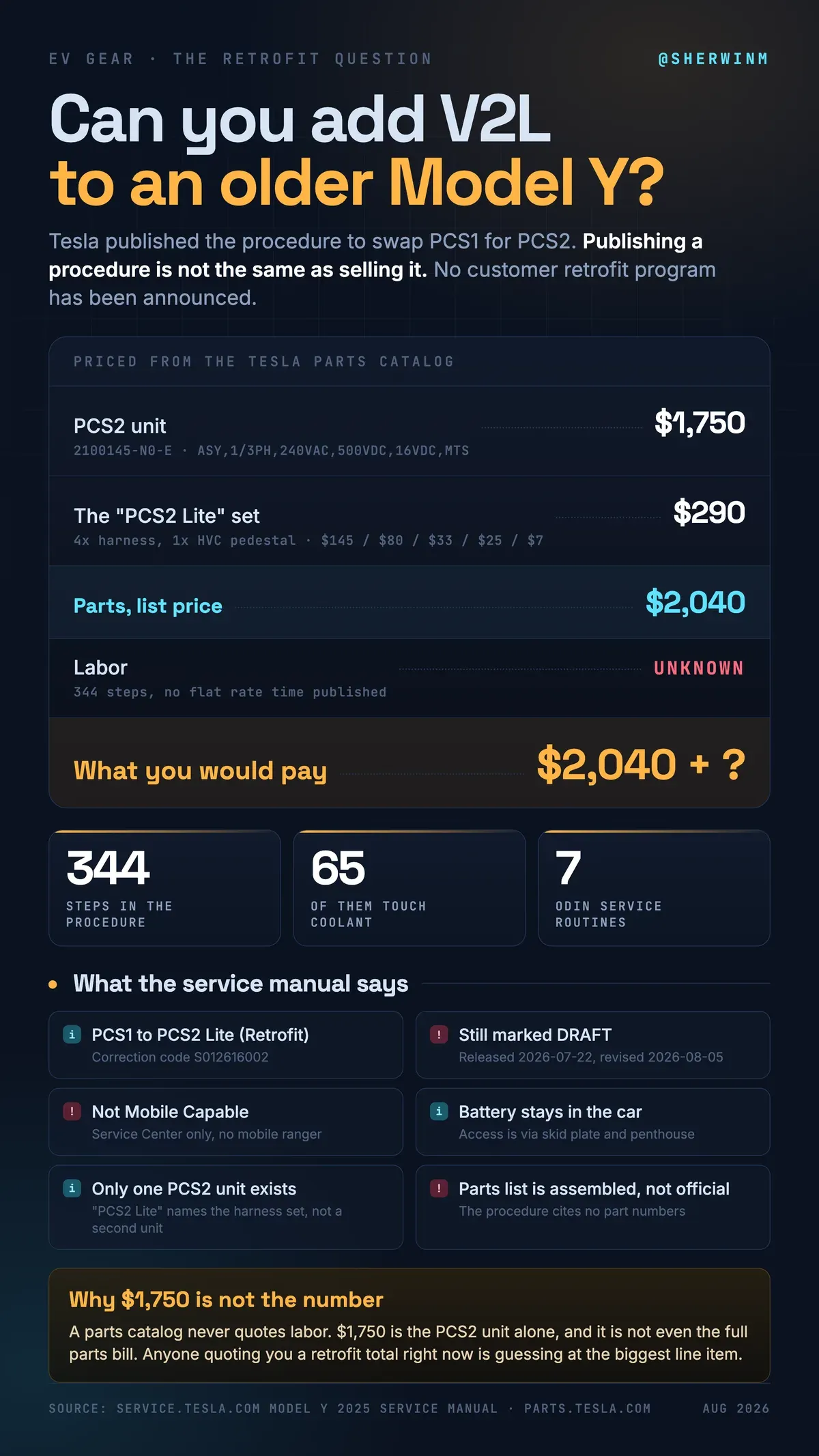
$1,750 is the PCS2 unit by itself. That is not the parts bill. Priced against my VIN, the unit plus four harnesses and a pedestal comes to $2,040. That list is mine, not Tesla’s. The service procedure cites no part numbers at all.
Then there is labor, and nobody can quote you. The procedure is called PCS1 to PCS2 Lite (Retrofit) and it runs 344 steps. It is marked Not Mobile Capable, so a Service Center has to do it. It is still marked draft. The battery stays in the car, but 65 of those steps touch coolant. No flat rate time is published anywhere.
So the honest number is $2,040 plus a labor figure that doesn’t exist publicly. Anyone quoting you a retrofit total right now is guessing at the biggest line item.
Nobody has been told they can buy this, either. Tesla published a procedure. That is not the same as selling a retrofit.
What I use instead
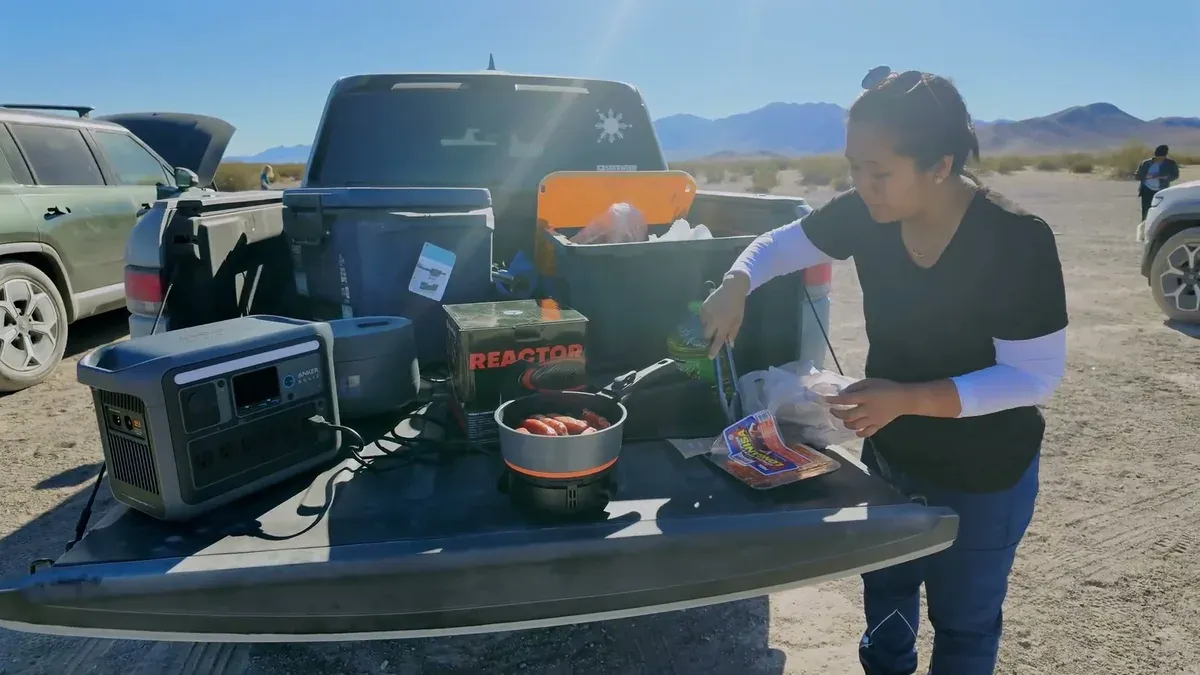
My Rivians already have outlets built in. The R1S does up to 1,500 watts, and I don’t have to hang a dongle off the charge port to get it. That is the part that bugs me. My gas minivan has outlets. Why is the Cybertruck still the only Tesla with them?
The bigger limit is not the wattage. You can’t use this while driving. An electric fridge takes 30 to 40 minutes to pull down cold, and longer before the drinks are. Running it on the way there is the whole point. This adapter only works parked.
So we keep using portable power stations. The Anker C1000 is a 1 kWh unit. It runs our pot and stove when we’re camping. The C300 is 288 Wh and small enough for a hotel bag. The little one goes on sale under $200. The C1000 lands around $500 to $600, sometimes with a solar panel. I would rather drain those than the car battery when we’re far from a charger.
If your Juniper isn’t compatible, that is where the money should go. Not into a $2,040 parts order.
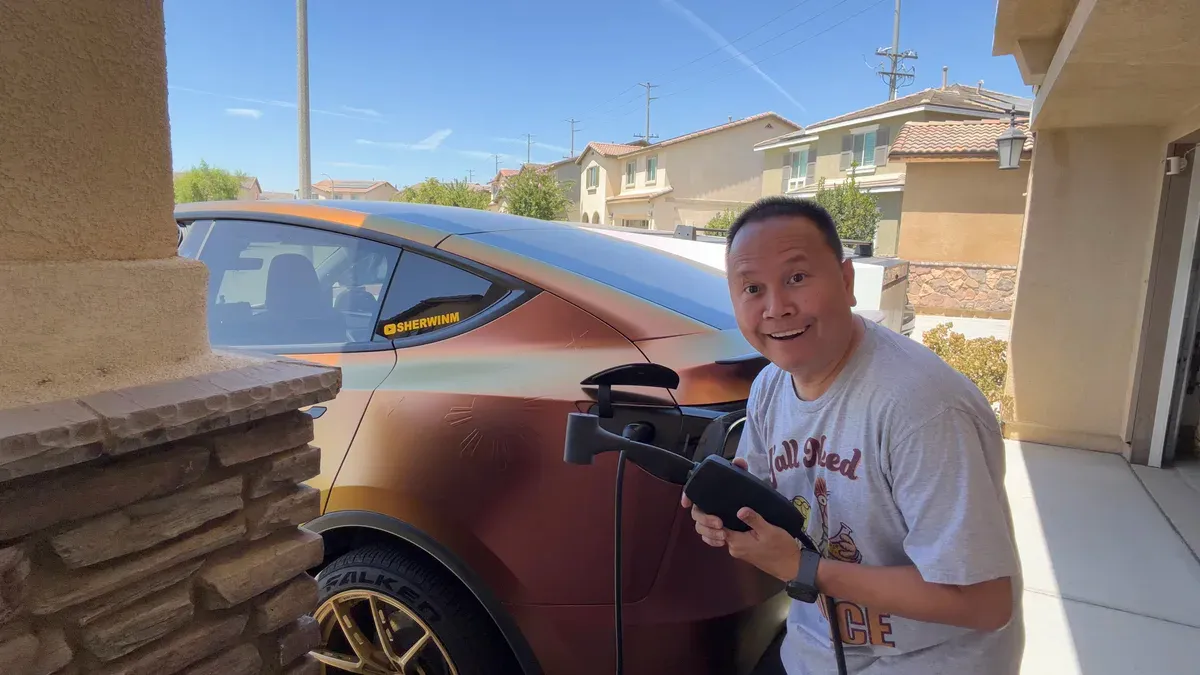
I’m keeping the adapter anyway. Somebody in the group will have a compatible car one day. But Tesla should just put outlets in the cars.
Leave a comment
Comments come straight to me rather than posting publicly, and I read every one. Your email is never published.