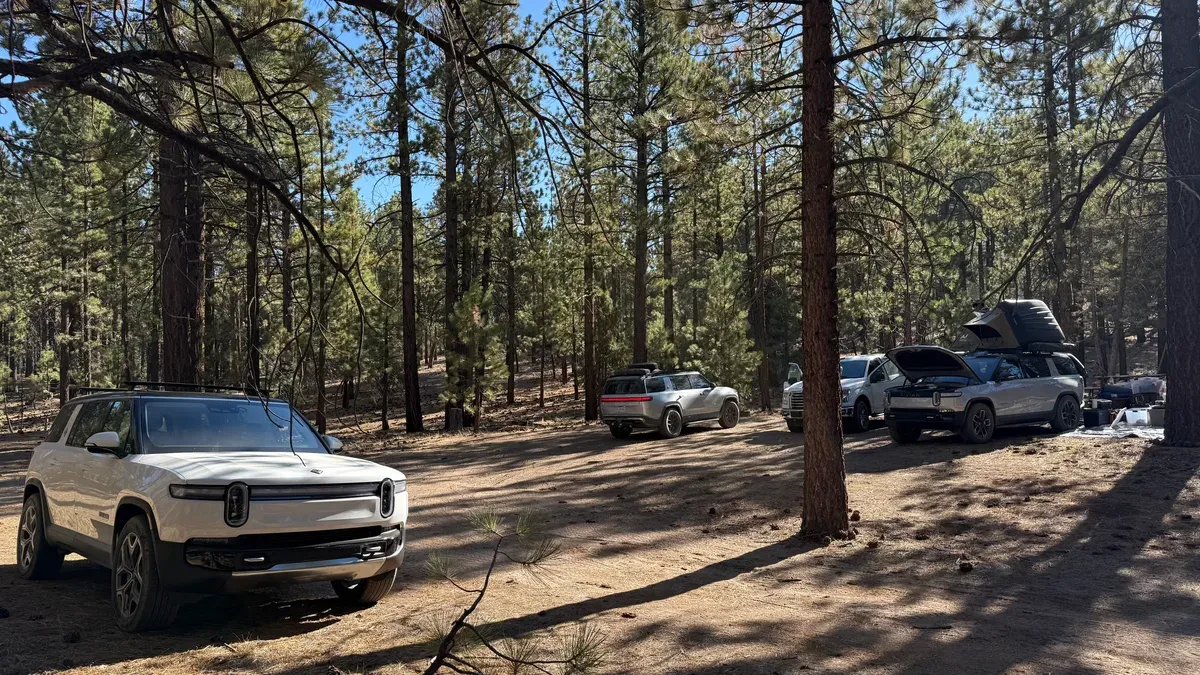
Abby didn’t make this one. Solo trip, seats folded flat, half the house stuffed in the back. Started at 98% state of charge, 327 miles estimated range, and headed up to Big Bear for the Toyo Tires Trail Pass event. First time really camping in the R1S.
Holcomb Valley and the Rivian Club Camp
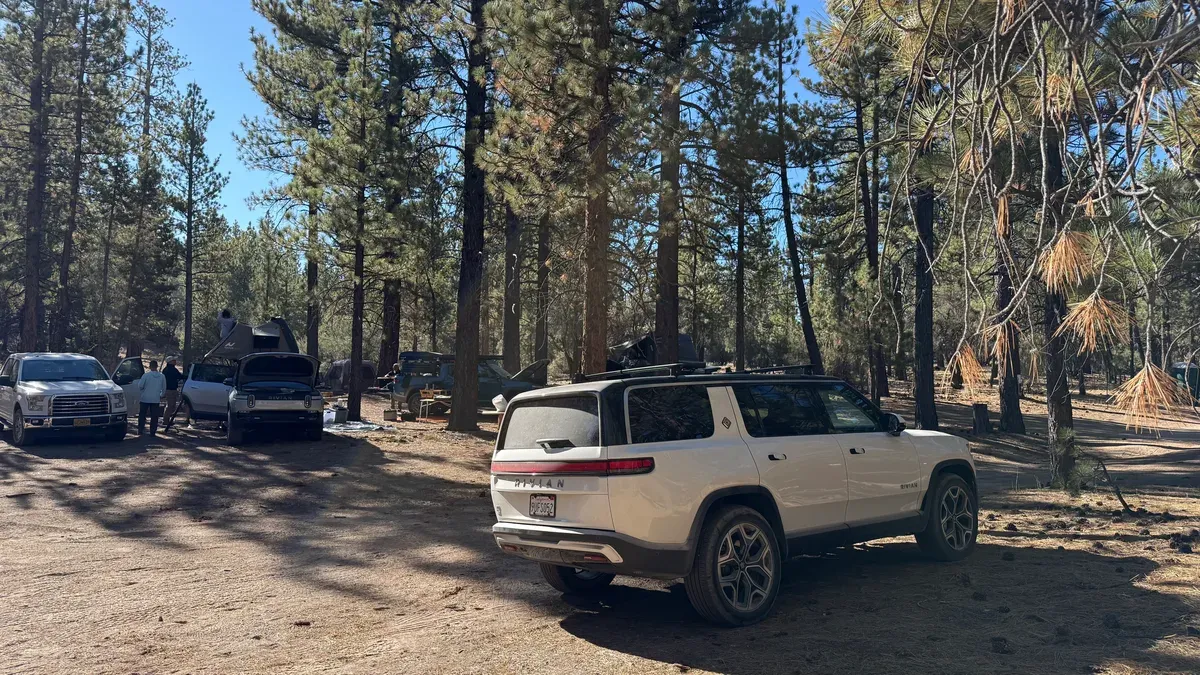
The Rivian Club was already set up by the time I arrived at Holcomb Valley. Ten to fourteen Rivians spread across a pine forest clearing, about two miles of unpaved road into the campsite. Not off-roading exactly, just not pavement. Still a different vibe than any parking lot meetup.
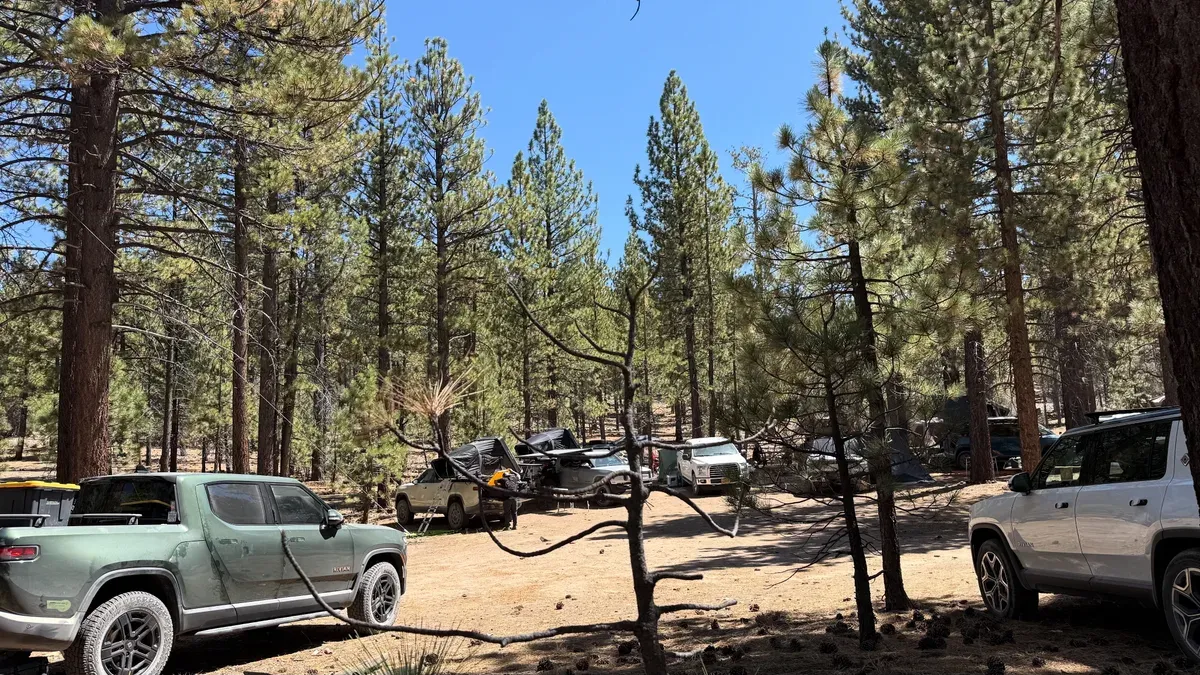
Setup for the night: Anker Solix with solar panel, Starlink, AstroAI fridge, and a tent that was absolutely not a pop-up. Abby had picked it out, neither of us had used it yet, and it became clear pretty fast that I was sleeping in the R1S. Which, honestly, worked out fine.
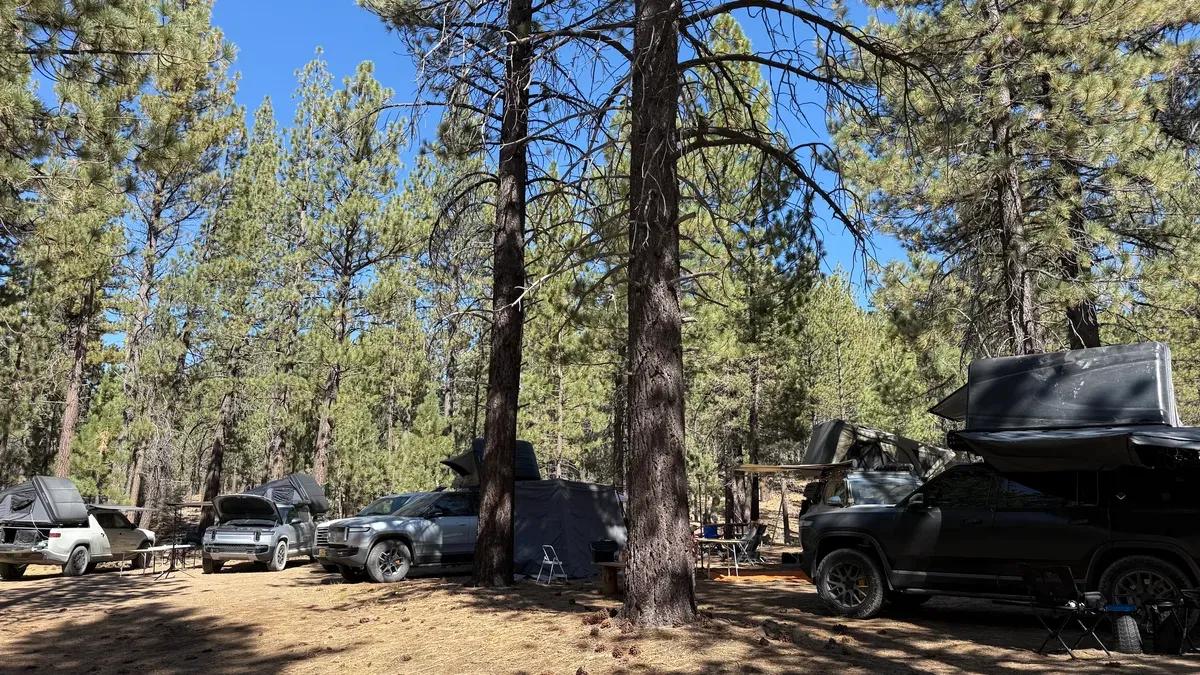
The crossbars were a problem. They wouldn’t lock all the way down, something Scott later helped me troubleshoot. That’s also why the awning stayed home, which I regretted once the afternoon hit. A shoutout to Sean for walking me through his rig earlier in the weekend. That slide-out kitchen setup is worth stealing ideas from if you’re building out an R1S for camping.
The Event Area
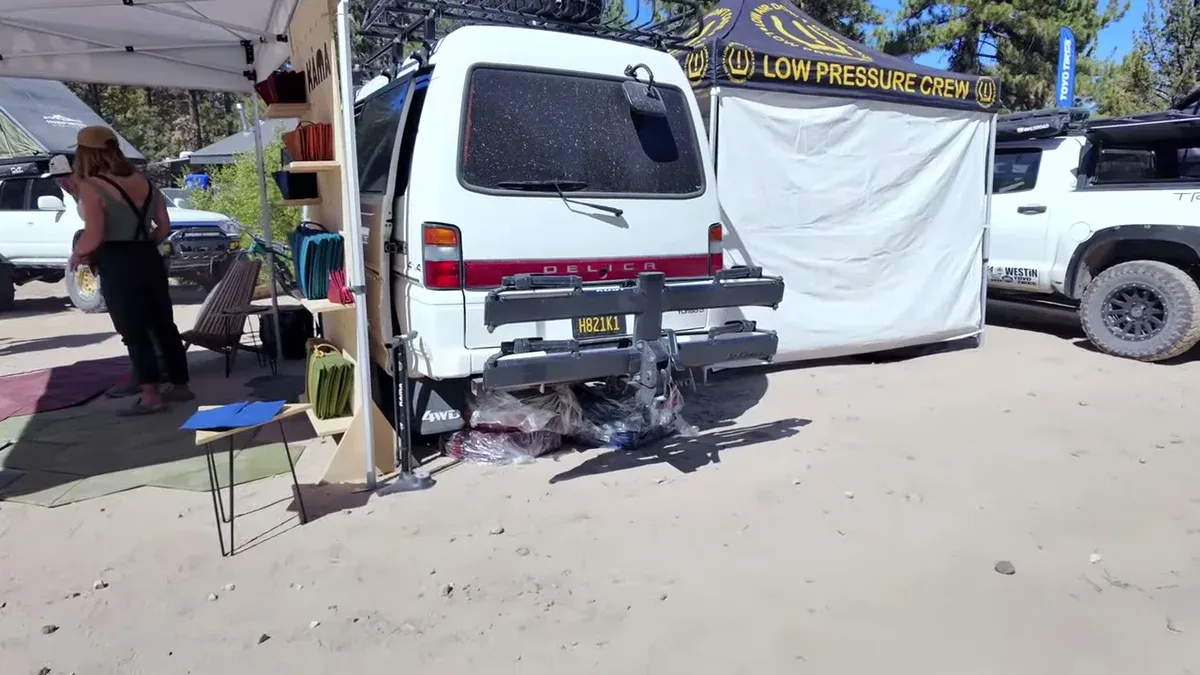
The vendor and display area had a strong mix of overlanding rigs. Enough variety that I kept saying “I need to cash out some investments” out loud.
A Mitsubishi Delica was the crowd favorite, a four-wheel drive van converted into part camper, part shop, complete with a subfloor build. MarsAG showed up with their Cybertruck. There were Pin Drop travel trailers with dual awnings and a full U-shaped kitchen in the back, Sprinter conversions with French cleat-style wall panels and wooden floors, and a Rinse Kit setup that made me realize how underprepared I was on the hygiene front.
One honest note: the bathroom situation is porta-potties only. If you’re planning on doing these events more regularly, a privacy tent that hangs off the crossbars or roof rack is worth adding to the gear list. I saw a few at the event and they looked practical.
Camp Mode Overnight
Raffles ran until dark, I didn’t win anything, and we had a propane fire going around the campsite. No wood allowed. Temperature was sitting around 51°F at bedtime.
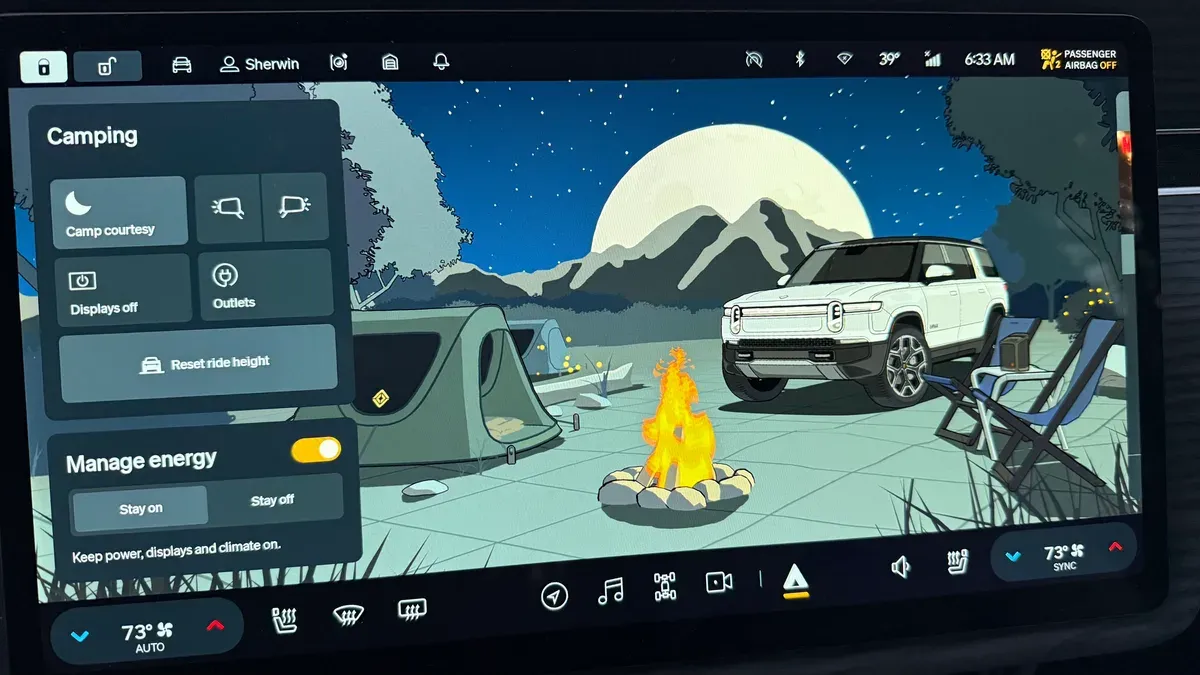
I had Camp Mode running with the temperature set to 73°F. Overnight low hit 39°F. By morning, I had used 18% of the battery over 10 hours. That felt high. Other Rivian owners at the event who were running HVAC out to their tents reported 8 to 10% overnight.
The Gen 2 R1S has a heat pump, which should make cold-weather conditioning more efficient. At 39°F, that’s exactly where heat pumps are supposed to outperform resistive heating. My numbers don’t reflect that yet. 18% is too much. Still working through what happened. Didn’t capture the energy breakdown screen in the morning, which I’ll do differently next time. The Rivian app data should have logged it, and I’ll share those screenshots when I pull them.
Two things I’d change: set the temperature higher than 73°F, and look into how others are optimizing Camp Mode drain. Gene had a similar setup at Death Valley that I got to see in action here too. His camp kitchen on the gear tunnel was running well into the night.
Morning and Packing Up
39°F at 7:00 AM, still in Camp Mode. The auto-leveling had the front suspension raised and rear lowered overnight. Resetting ride height takes a couple of minutes. You can hear the compressor cycling through the adjustment. Slower on Gen 2 than I remember Gen 1 being, but it’s a nice feature to have.
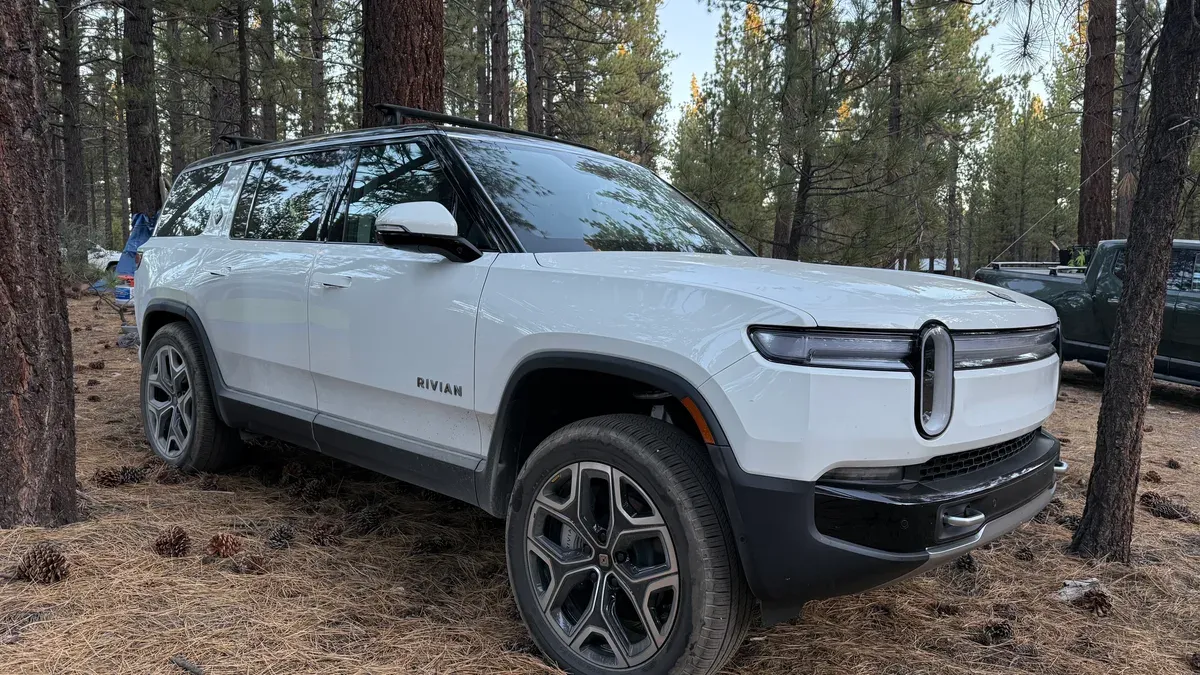
The Anker Solix was drained after heating soup and water the night before, so I charged it off the R1S for about an hour in the morning. Step stool recommendation: bring one. Getting in and out through the tailgate without it gets old fast.
Sport Mode on the Way Down and Trip Data
Sport mode through Big Bear Canyon on the way down is something else. For an SUV this size, the control through corners is legitimately surprising. Lowered ride height, tightened suspension, and the torque just sits there ready. Not a sports car, but not what you expect from a three-row EV either.
Downhill regen kept state of charge floating around 42 to 43% for the first 18 miles. Going up costs more than you get back, but you get something back, which matters on a multi-day trip.
Final numbers home: 102.5 miles, 1.57 mi/kWh, 66 kWh used. The Camp Mode drain skews that number significantly. Strip out the 18% overnight and the driving efficiency is closer to what I’d expect from previous Big Bear runs.
Good first camping trip in the R1S. The gear list needs work, the crossbars need fixing, and next time Abby’s coming. If you’ve run Camp Mode overnight in the Gen 2 and have numbers to share, drop them in the comments.
Leave a comment
Comments come straight to me rather than posting publicly, and I read every one. Your email is never published.