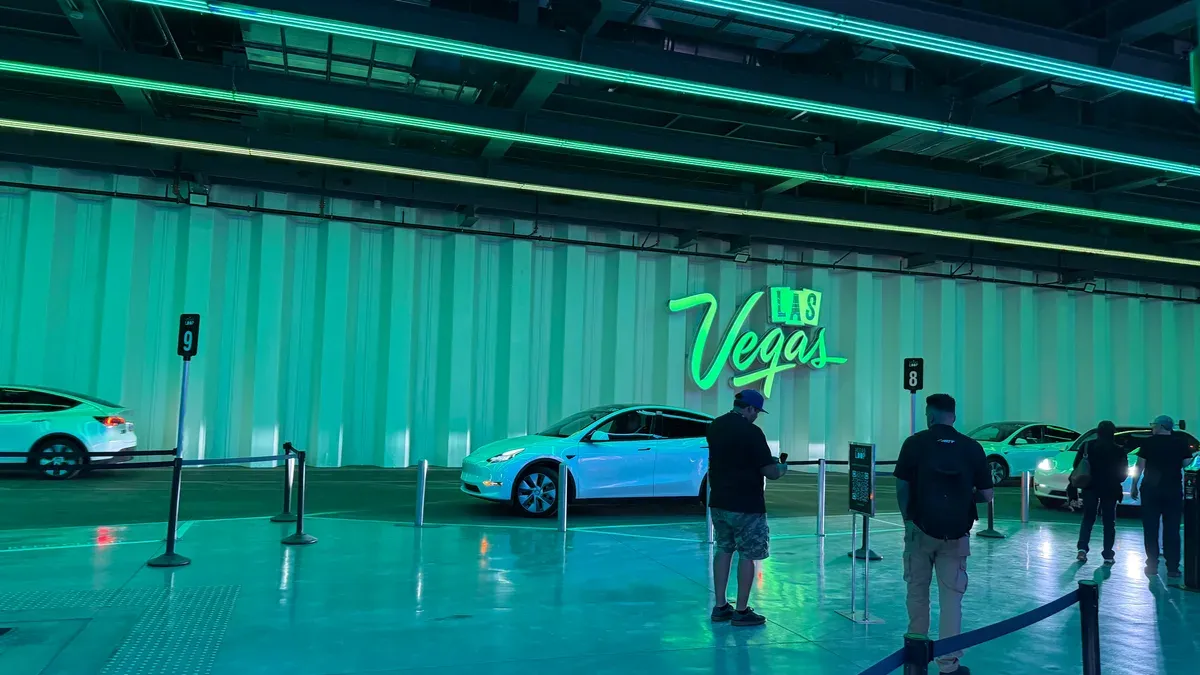
The Juniper had never been to Las Vegas. SEMA 2025 was the first trip. Newly wrapped, 326 miles of range showing at 100% charge, and somehow I made it all the way to Primm before realizing I left my entire suitcase at home. Great start.
The full drive is in the video below. This covers the highlights: the charging stops, the Vegas Loop, and the badge pickup mess.
FSD v14.1 on the 15 North
Started the drive on FSD 14.1.4, testing both Hurry and Mad Max profiles. The biggest improvement I noticed right away: it’s no longer camping in the left lane. On the 15 North, FSD is now actively maneuvering across all three lanes to get around slower traffic, the way you’d actually drive. Hurry sits right at 80 mph. Mad Max rides at 85 when it can, which is the cap.
There was one standout moment heading through the desert. Tire debris on the road, chunks of blown-out rubber scattered across the lane. FSD on Standard detected it and maneuvered around it without any input. That’s the kind of real-world improvement that actually matters on a highway run.
Efficiency at the 50-mile mark was close to 300 Wh/mile. It was windy with crosswinds pushing the car around, so nothing alarming, just the usual 15 North conditions.
Eddie World and the Baker Decision
Pulled off at Eddie World for the mandatory jerky run. 73% state of charge, 250.3 Wh/mile. The sweet and spicy brisket and the mango habanero are the go-to. They finally had the hats in stock. Got hooked up without even using points.
From there the call was whether to stop at Baker or push to Primm. I don’t like arriving at Baker below 50%, and I came through at 54%, so I kept moving. The car estimated I’d land at Primm around 28-30%. Arrived at 31%, which was actually better than expected. That stretch past Baker is mostly uphill and usually tanks your numbers.
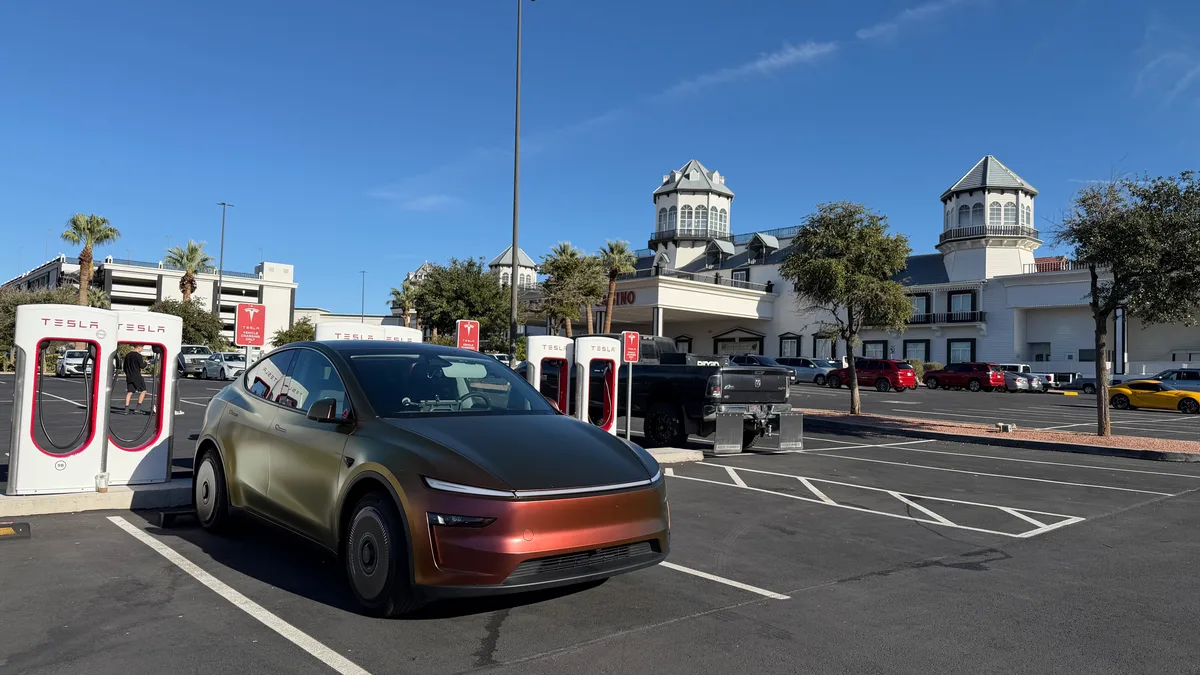
Charged at the Primm Supercharger while grabbing a Happy Meal. Not a packed station, so no peak pricing to worry about. Charged from 31% up to the low 80s and got back on the road.
The Suitcase
Sitting in the parking lot at Primm, ready to head out, it hit me: no suitcase. Packed my camera gear, packed my insulin and fridge items, forgot literally every piece of clothing I brought for the trip. I’m going to SEMA, which runs for multiple days, wearing what I had on.
There’s a Ross by the convention center. Two shirts and a long-sleeve later, problem mostly solved. I’m still going to feel terrible wearing unwashed clothes, but I had no choice. Good story though.
Vegas Loop, Zoox, and Getting the Badge
Parked at Resorts World ($21 flat, no way to avoid it) and took the Vegas Loop to the convention center. The Loop went up in price: it was $5 roundtrip last year, now it’s $12.50. Not a huge deal, but worth knowing if you’re budgeting for a SEMA trip.
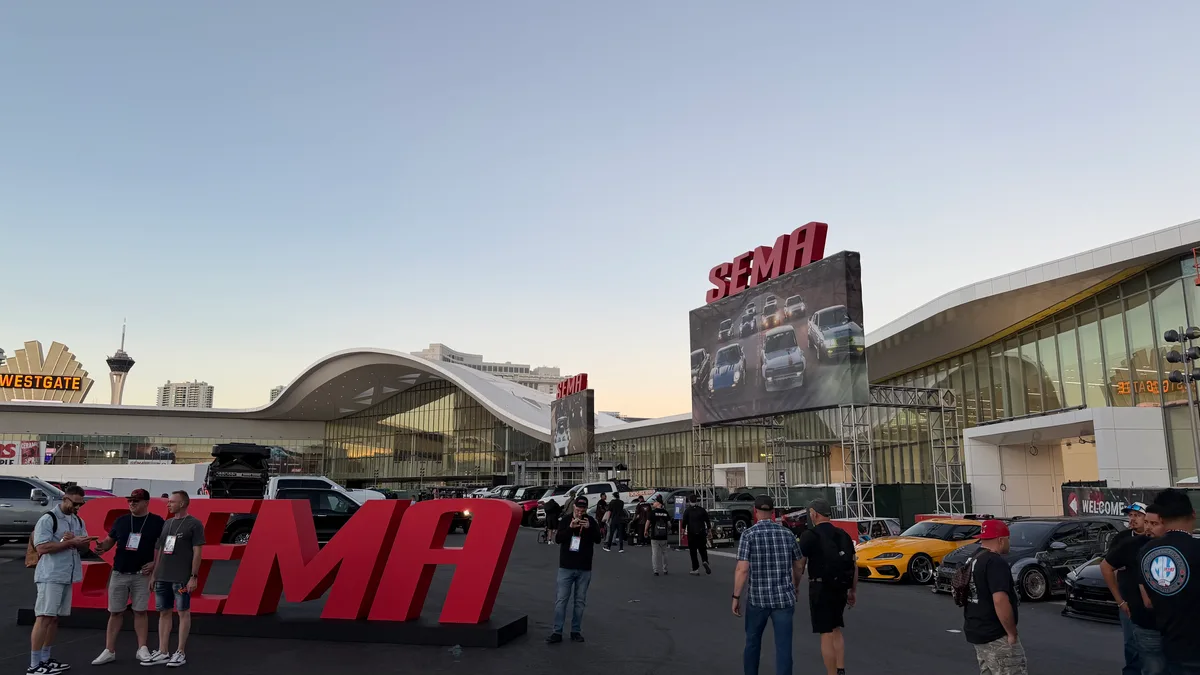
The badge pickup was the same fiasco as last year. Got sent to South Hall, which was the right building but the wrong side. Ended up walking two blocks from South Hall back toward Central, through the truck section on the way, which was actually a nice accidental preview of what was outside. Two years in a row sending me to the wrong hall. At this point I should just go straight to West Hall and work backward.
SEMA Floor
The outside area near West Hall had trucks jumping off a ramp with Fontainebleau in the background. That alone was worth the walk. Inside I spotted a Rivian R1T from Kat Racks, a brand making roof rack systems for Rivians that I hadn’t seen before.
And then, Jerry’s orange Cybertruck. It’s right at the West Hall entrance, VIP placement, next to The Sphere. The build has evolved since the last time I saw it. I’m covering that truck in a separate dedicated video, so go check that one out.
Charging Home
Left Vegas at 60% state of charge after two nights parked. Sentry Mode logged eight events, which was low given I parked far from foot traffic. The Juniper lost about 12% over two nights just sitting, which tracks with what I’d expect.
Hit Baker on the return run at 24% state of charge. Pulled 239 kW peak, which dropped fast. Here’s the thing about those max charging speeds: Standard Range Model Ys and Model 3s are rated at 225 kW now instead of 250. But you need to be below 20% to even see those peaks, and they only last a couple of minutes before stepping down. What actually matters on a road trip is how long the charger holds above 150 kW, not what the ceiling is.
At Baker I ran into a couple with an Ioniq 5 trying to figure out why they couldn’t charge at the Tesla Supercharger. They had an adapter, but these stalls aren’t compatible even with an adapter. Happened to know there was an Electrify America right there. This comes up on almost every road trip now. If you’re driving a non-Tesla and want to charge at Tesla stations, use the Tesla app first to confirm compatibility before you pull in. The A2ZEV adapter guide covers this in more detail.
Stopped again at Hesperia. Arrived at 16% and briefly touched 250 kW, which is the ceiling for the Premium Model Y. Dropped below 200 kW by 27%. Same pattern as Baker.
One thing I noticed on the drive that I didn’t expect: FSD detected the camera housing needed cleaning and activated the wiper fluid on just that section of the windshield. It didn’t do a full sweep, just back and forth a few times across the camera area. I had no idea FSD could do that. Makes sense that it would, since it needs clear visibility to function, but I’d never seen it happen before.
Trip Data
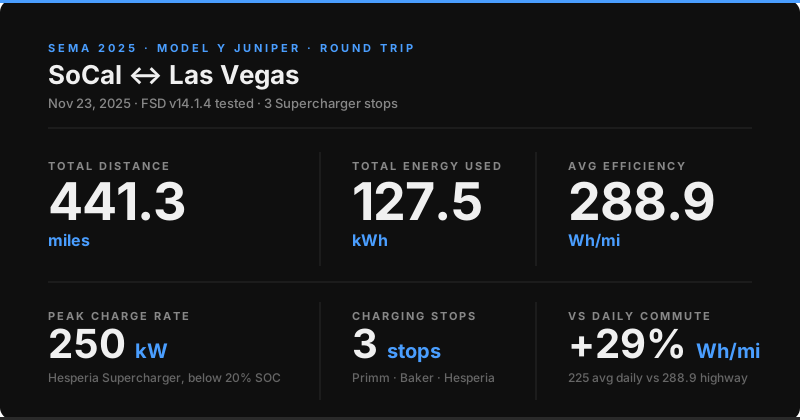
The Vegas route is not flat. Elevation changes plus consistent crosswinds push efficiency up, which is why 288.9 Wh/mile here versus 220 to 230 on my daily commute is completely expected.
If you’re picking up a Model Y Juniper, use my Tesla referral link.
Leave a comment
Comments come straight to me rather than posting publicly, and I read every one. Your email is never published.