Ran into my friend Vic at an EV meetup and he offered to walk me through his whole setup. I said yes immediately. His Gen 1 Quad Motor R1S has been built out for full off-grid overlanding: no campground hookups, no generator, no compromises. Here’s everything that’s on it.
The Roof Setup
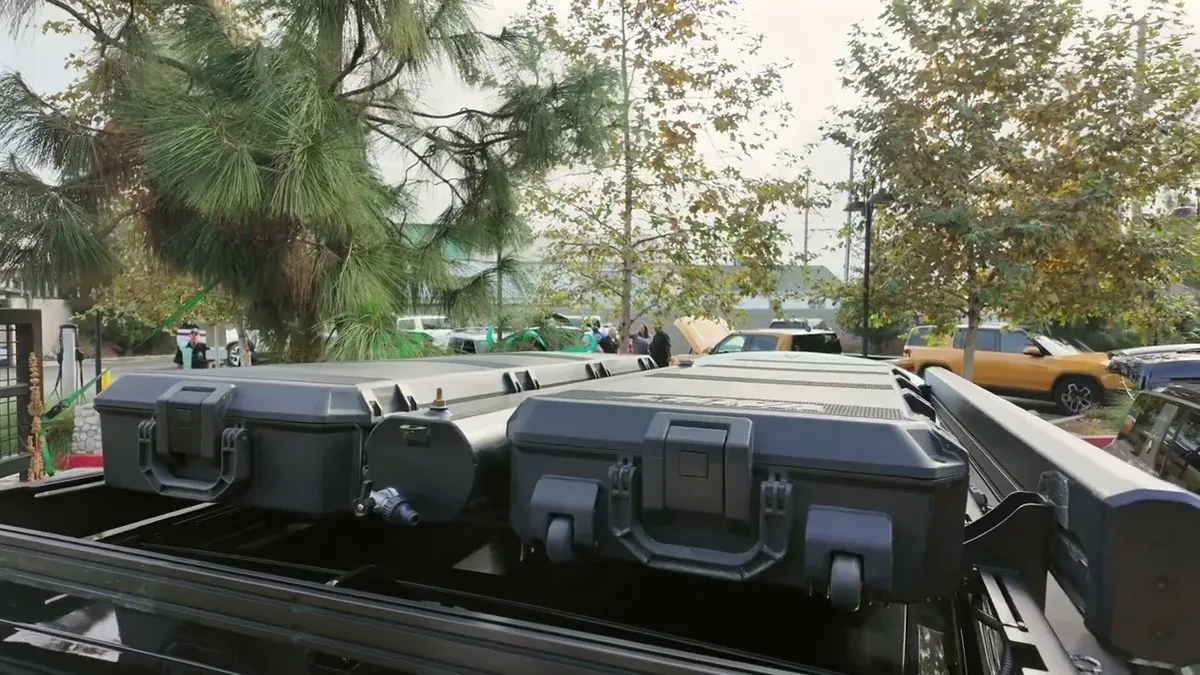
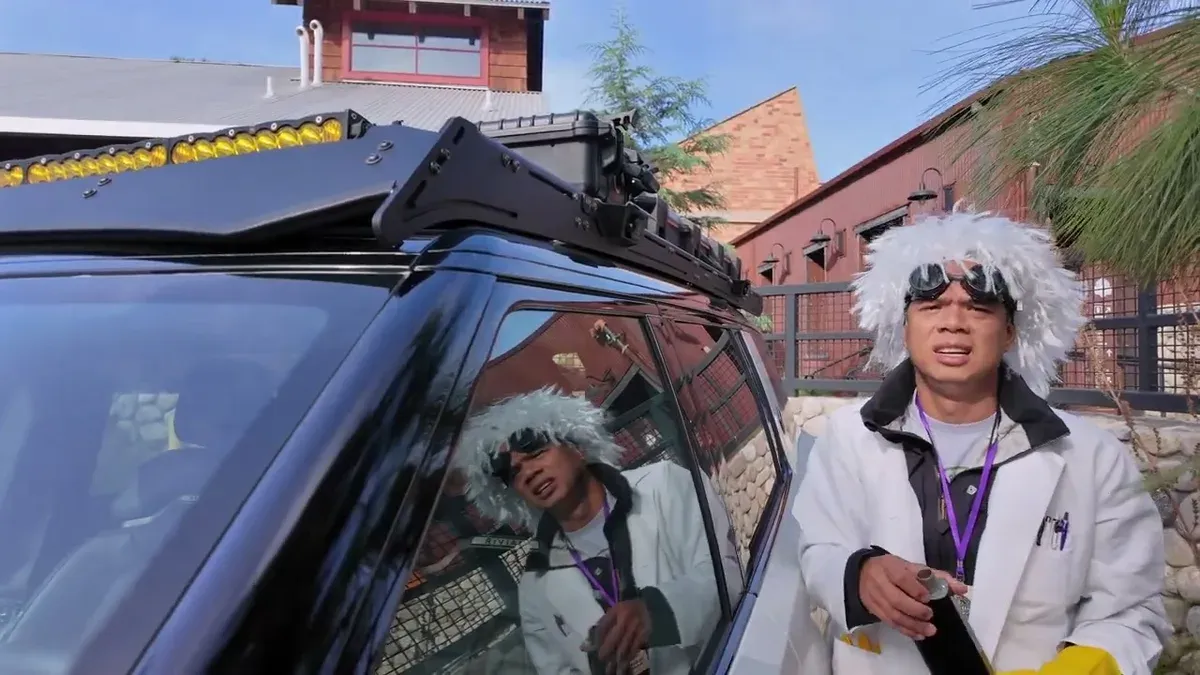
The foundation is a Prinsu roof rack built specifically for the R1S. On top of it: a 40-inch BD light bar, a compact Kammok awning, two Pelican Vault V800 cases, and a 4-gallon Road Shower mounted in the middle.
The Pelicans are doing real work. Vic fits folding chairs, folding tables, fishing rods, and the campsite lighting in those two cases. I assumed they were just for smaller gear, but full-size folding chairs fitting in there is legitimately impressive.
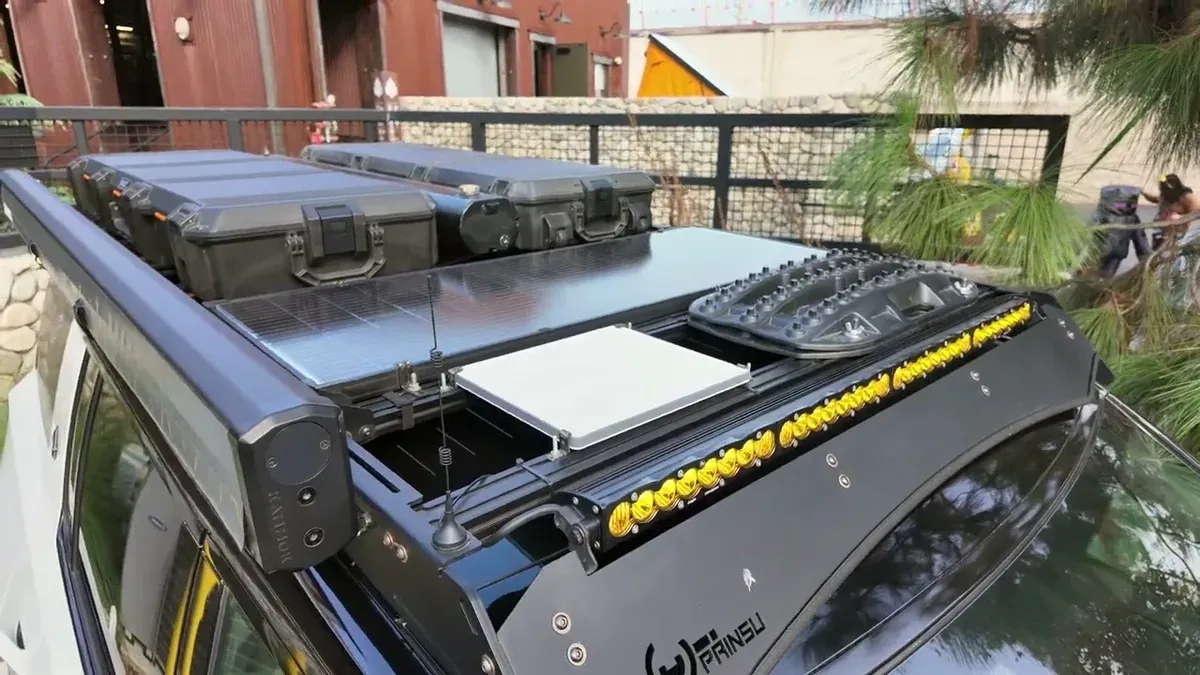
The Road Shower holds 4 gallons and lives on the rack. If you’ve ever come back from a dusty trail and had to drive home like that, you already understand why it’s there.
He also has a 100-watt solar panel mounted on the rack, custom-cut for the Rivian and sourced through Etsy. It feeds into a portable battery system, not the vehicle’s main pack.
Power and Connectivity
The off-grid power system is a 3,800Wh (about 3.8kWh) portable battery paired with a 200-watt inverter. Everything on the rig runs off this: the light bar, the Starlink, the fridge. Vic keeps it isolated from the main vehicle battery on purpose. When you’re camping overnight, you don’t want an unexpected draw to cut into your driving range in the morning.
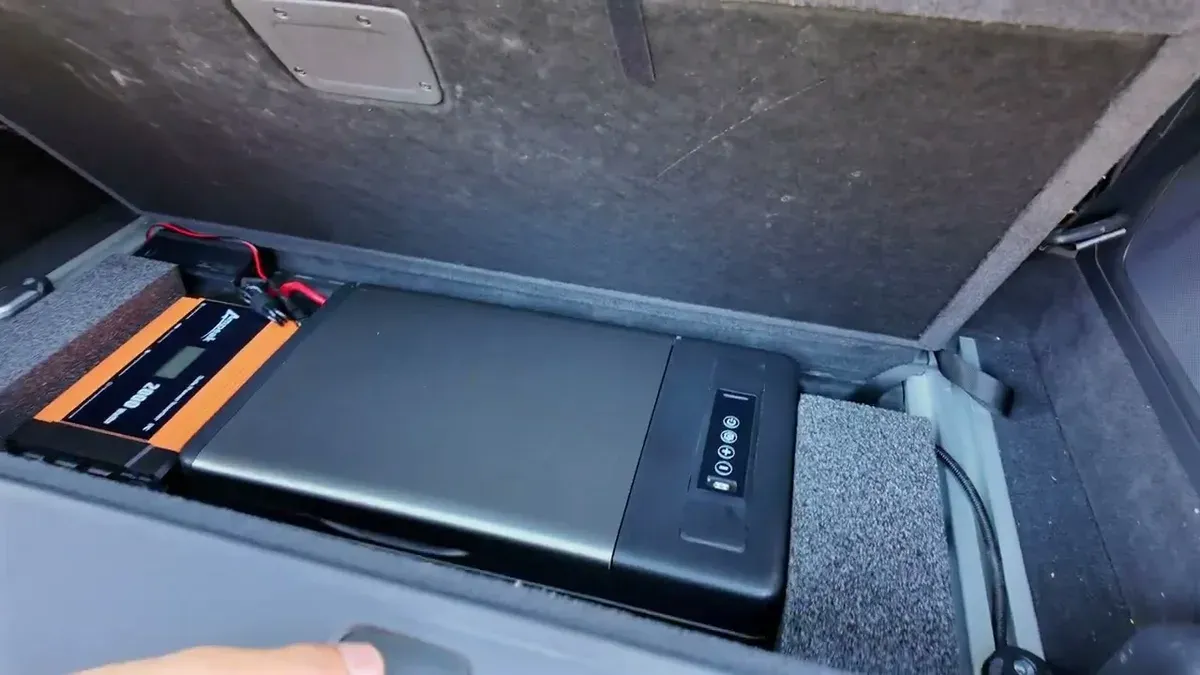
The Starlink is tucked into the roof rack system and stays on whenever they’re out camping. Combined with the solar charging during the day and the 3.8kWh buffer, the whole system runs continuously without ever touching shore power.
Starlink on a camping rig is something I’ve thought about for my own setup too. Having Starlink out in the middle of nowhere completely changes what’s possible. Working remotely from a campsite stops being a fantasy.
Cargo and Sleeping
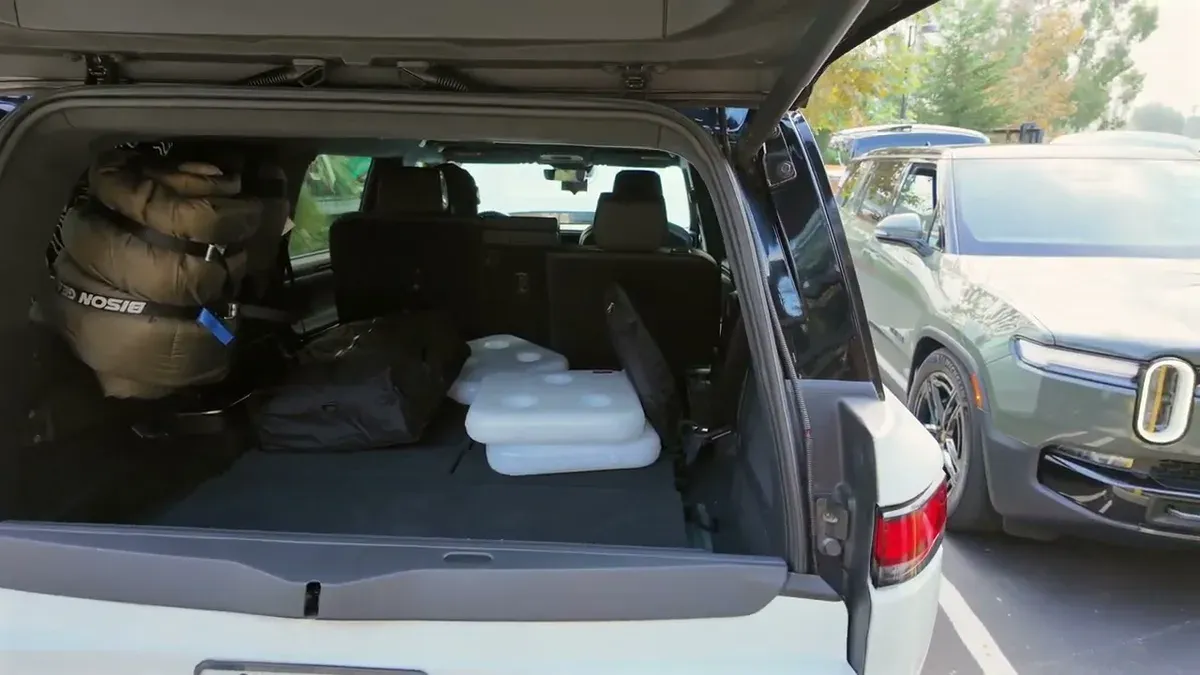
The rear cargo area holds an 18-quart fridge, the battery system, a sleeping bag mounted with suction cups, and an inflatable mattress. Vic sleeps inside the vehicle, which makes sense. You’re already in a roomy SUV with climate control. Why pitch a tent?
He also has a spare tire carrier that doubles as a pull-out table. That’s the kind of dual-purpose thinking that makes a build like this actually work on the trail.
The Heater
This is the part of the build that got my attention. Vic runs a diesel heater, but fueled with kerosene instead of diesel. Kerosene burns cleaner, requires almost no maintenance, and isn’t toxic. The fuel bottle lasts 8 to 12 hours depending on the temperature setting, and you can control the thermostat three ways: via phone, remote control, or a manual controller on the unit. The exhaust runs through a hose out a cracked window.
He has multiple units stored in small protective cases, which means this isn’t just a backup item. It’s part of the core kit.
Camp Mode Update
Vic mentioned that the Halloween software update renamed Camp Mode to Climate Hold and added a timer. You can now set exactly how many hours you want it to run. I had a rough experience at Big Bear where Camp Mode burned through a lot more energy than expected, so having that timer is a real improvement. Good to know before my next overnight trip in the R1S.
The Doc Brown Touch
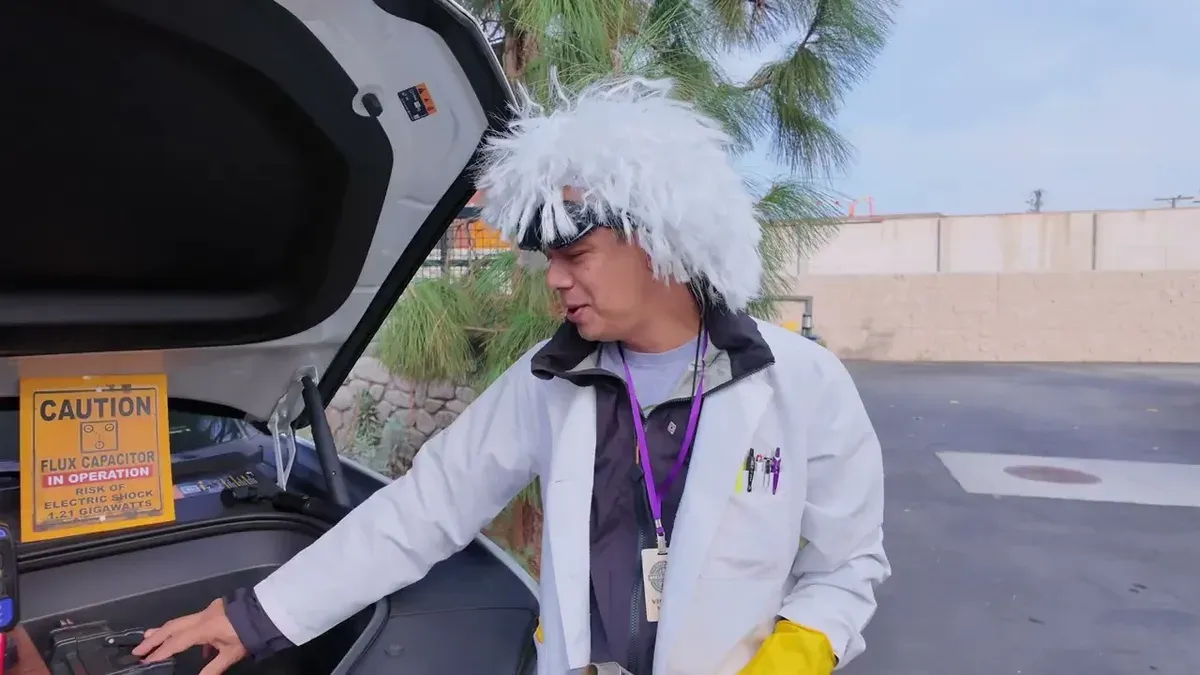
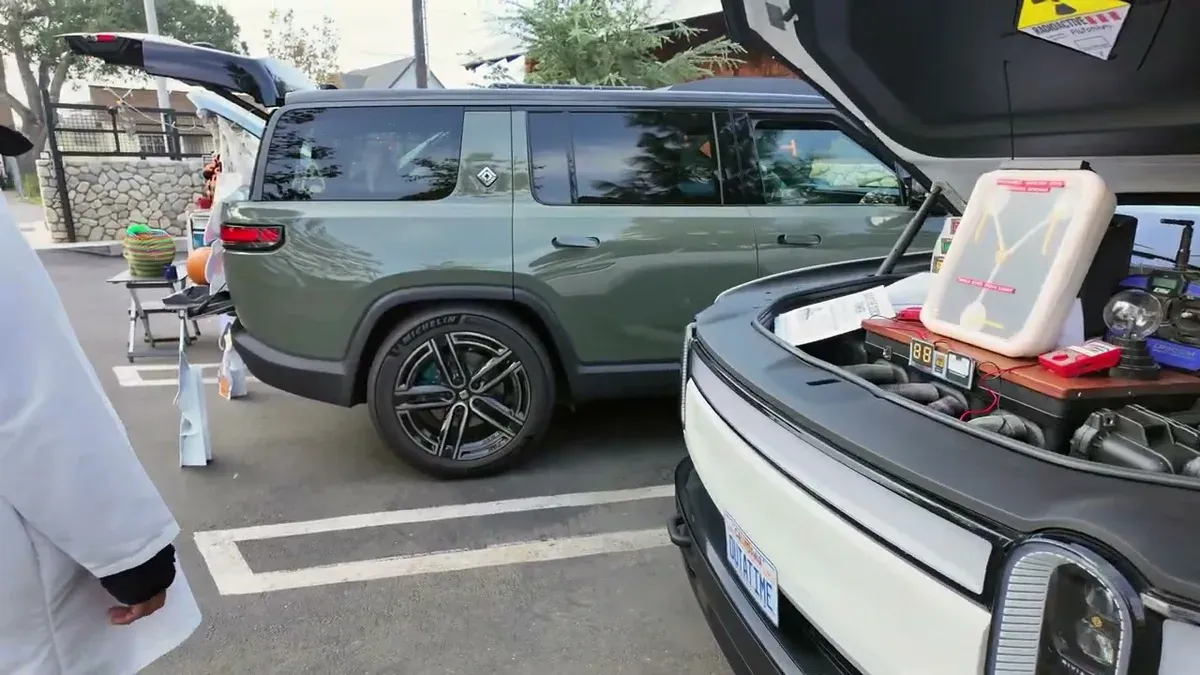
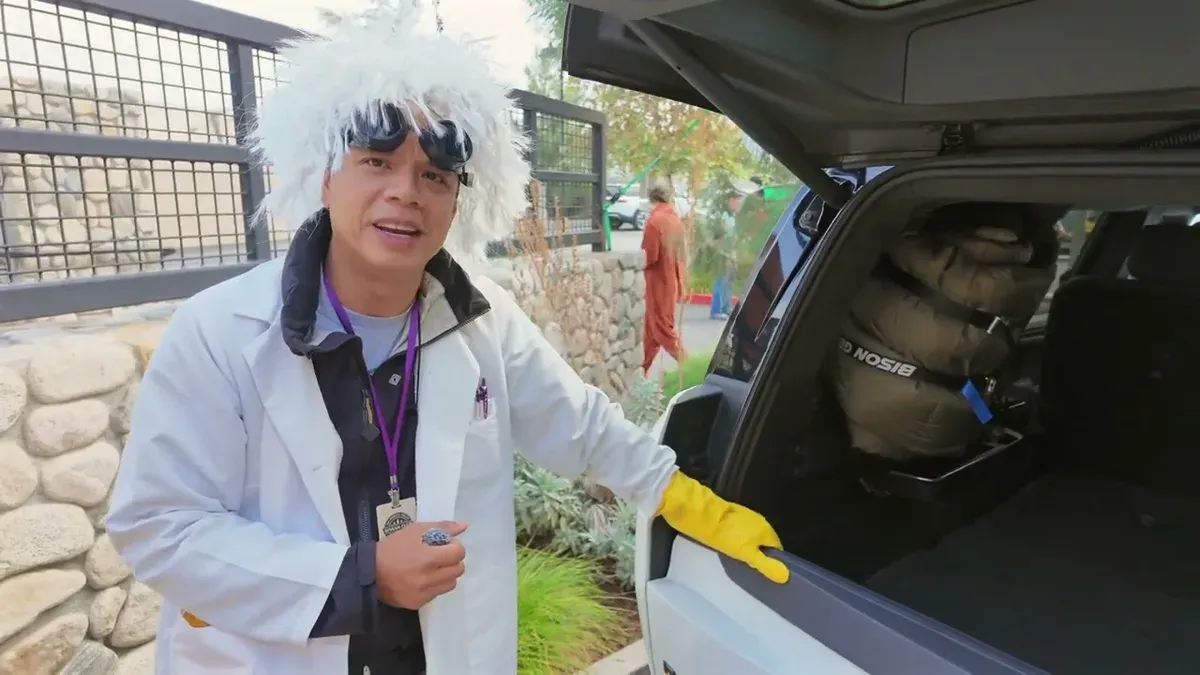
Vic showed up to the meetup in full Doc Brown costume. The R1T next to his R1S had a “Caution: Flux Capacitor” sign in the frunk. It was a whole thing.
But honestly, the costume fits. This R1S is the kind of EV build that makes you rethink what a car can be. It’s not just transportation, it’s a full off-grid system you happen to drive to the trailhead.
If you’re building out a Rivian for overlanding or just thinking about where to start, this tour is worth your time. Full video above.
Leave a comment
Comments come straight to me rather than posting publicly, and I read every one. Your email is never published.