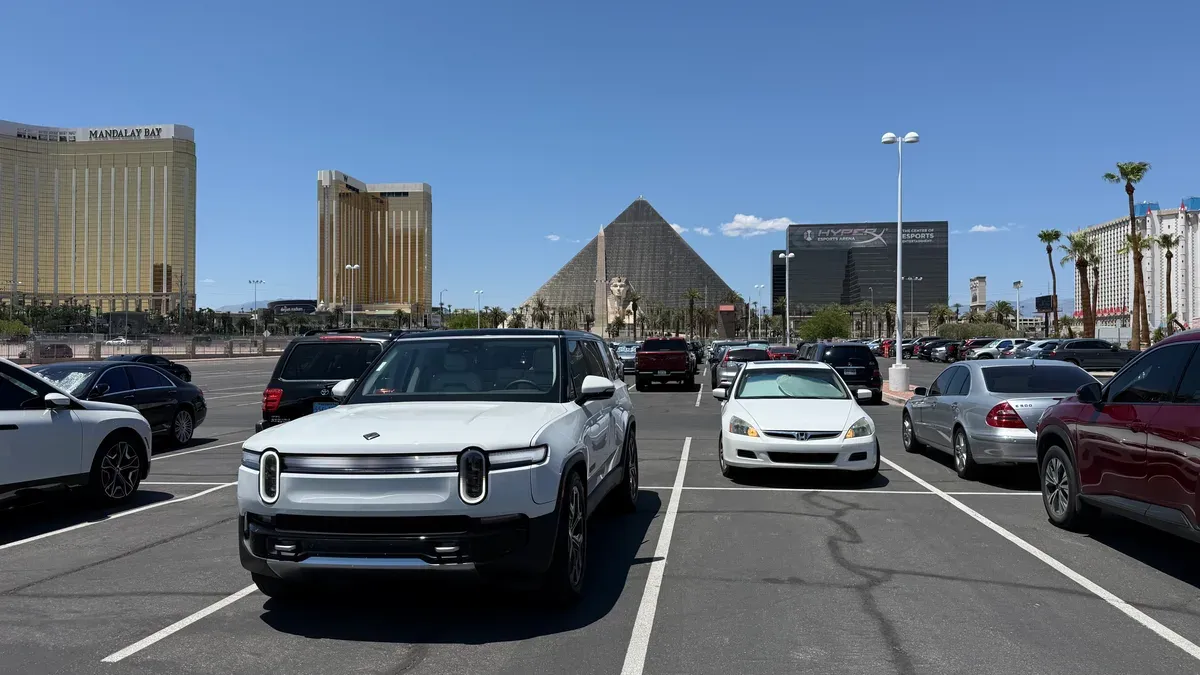
The biggest reason I switched from the R1T to the R1S was simple: I wanted to bring more people. Six of us loaded up for this trip, our first family road trip in the Gen 2 R1S: me, Abby, the boys, and my parents. Sub-trunk packed with a cart and a large suitcase, one third-row seat folded for the extra luggage, 70% state of charge, and 103°F waiting for us in the desert.
Barstow Stop: Heat and a Charging Cutoff
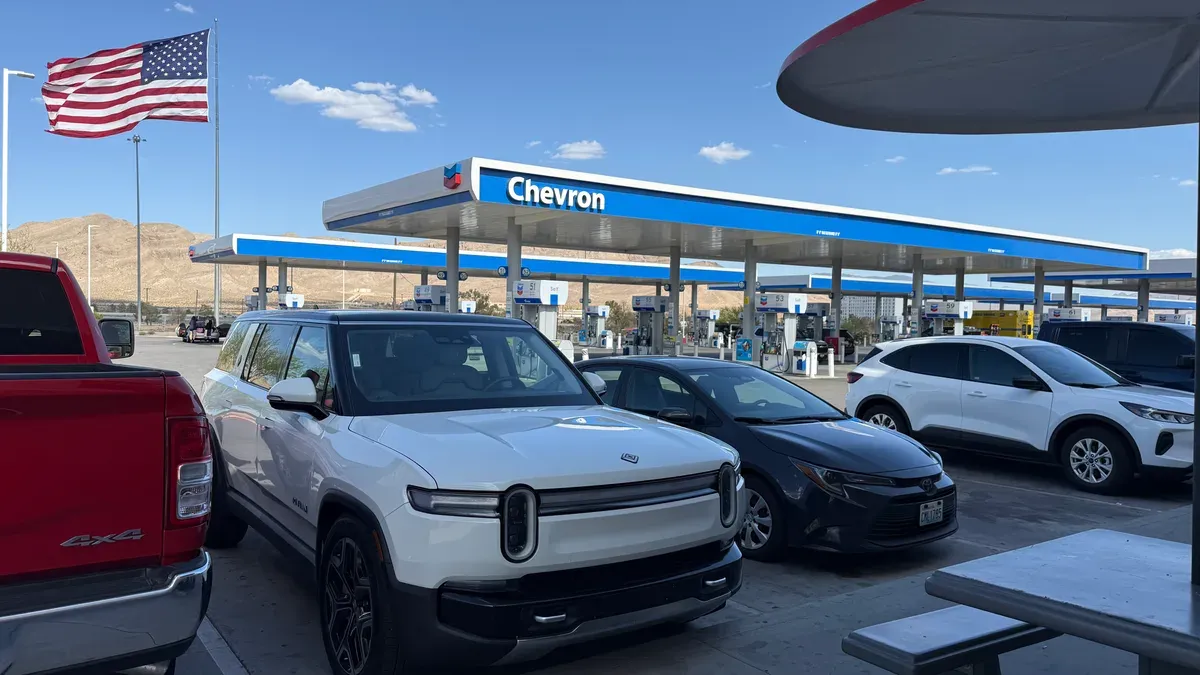
We pulled into the Barstow Rivian Adventure Network with 73.4 miles driven and 41% state of charge. Ambient temp was 103°F, battery temp was 102°F. We were the only Rivian there, which made the math simple: plug in and charge as high as possible so we wouldn’t need to stop again.
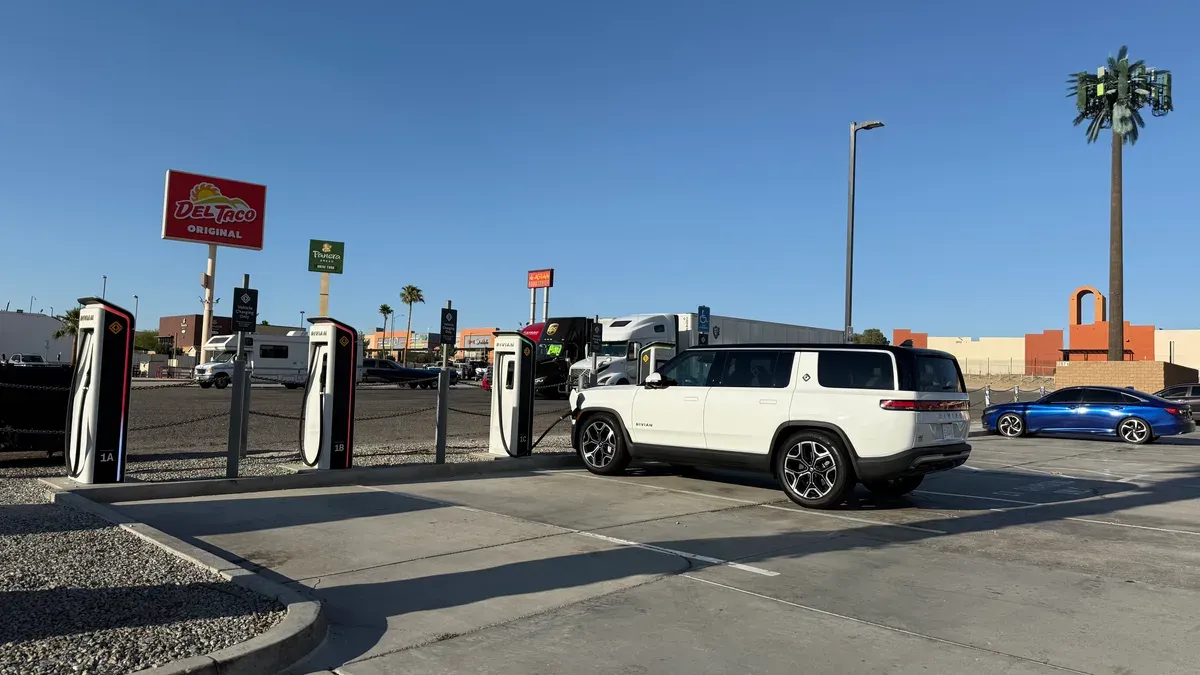
We peaked around 154 kW at 41% and I was pushing for 100%, hoping to arrive in Vegas with a full battery. Then the app sent a notification.
It stopped at 85%, 283 miles of rated range. Battery temps had climbed to 126°F. The sun was hitting the charge port directly, which probably didn’t help. The eject button was red. We unplugged, walked back to Panda Express to finish eating, and continued on. 126°F appears to be the thermal cutoff point for the Gen 2 R1S large pack. I never hit this with the Gen 1 R1T on the same route last summer.
Town Square: Vegas Arrival at 19%
We arrived at Town Square in Las Vegas with 19% state of charge, 225.9 miles driven and 101 kWh used. The RAN rate there was 61 cents per kilowatt-hour. We charged to around 71% at 107 kW and checked in for the night.
The drive in gave me a chance to notice some things about the R1S. The matrix headlights are genuinely cool. They high-beam the sides and selectively shut off LEDs when oncoming traffic is detected, so you’re not blinding anyone but you’re still lighting up road signs as you pass. Europe has had this tech for years. Worth having.
I also kept Driver+ on for most of the highway stretch. The R1S accelerator pedal has a heavier feel compared to the Teslas, and on a long drive I don’t want to keep my foot pressed constantly. Driver Assist handles that.
One thing to know about the R1S suspension: leaving it on auto lowers the ride height at speed, which hurts comfort. I kept it on standard height for the whole trip. Slightly less efficient, maybe 1-2%, but the ride quality difference is real. You also can’t adjust suspension height while Driver Assist is active or above 80 mph.
Vegas: Orchid, Bellagio, Fremont
We had lunch at Orchid, same spot we hit on the Cybertruck’s first Vegas road trip. Great spot. That afternoon, Bellagio.
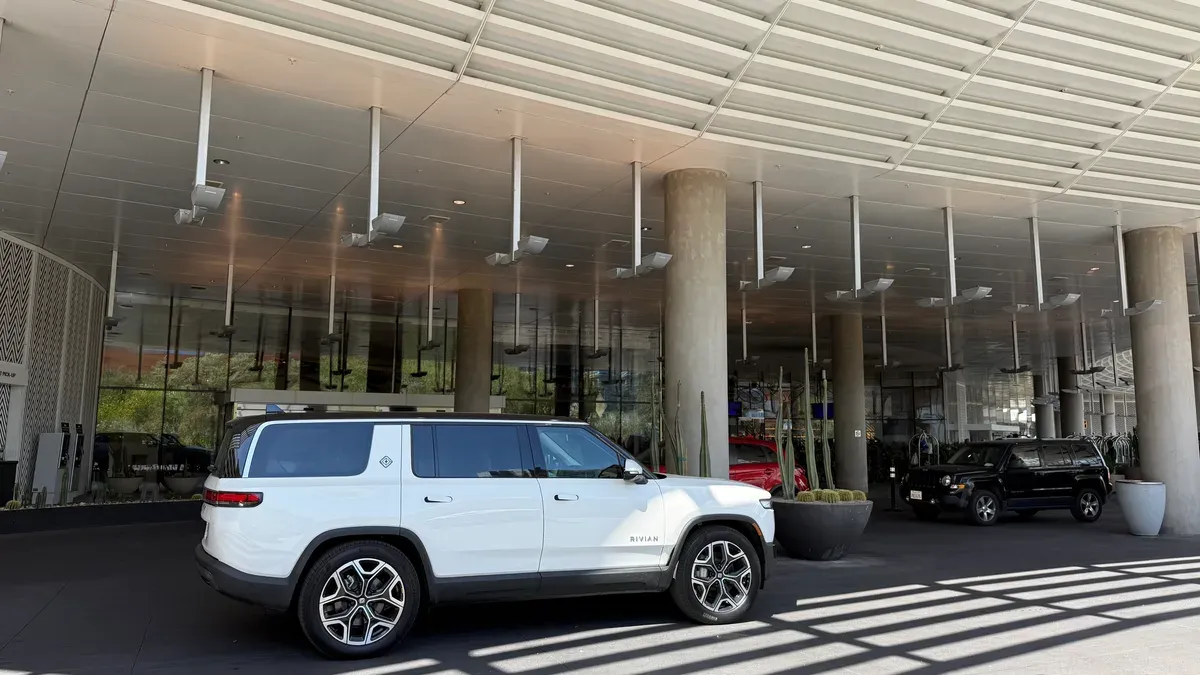
The Conservatory had an animal kingdom summer display. From there we walked over to watch the fountain show. If you’ve seen it before, you know. If you haven’t, it still gets you.
That night: Fremont Street. My parents haven’t been to downtown Las Vegas in about 30 years. A lot has changed.
Dinner at Hwaro afterward. If you haven’t been, go.
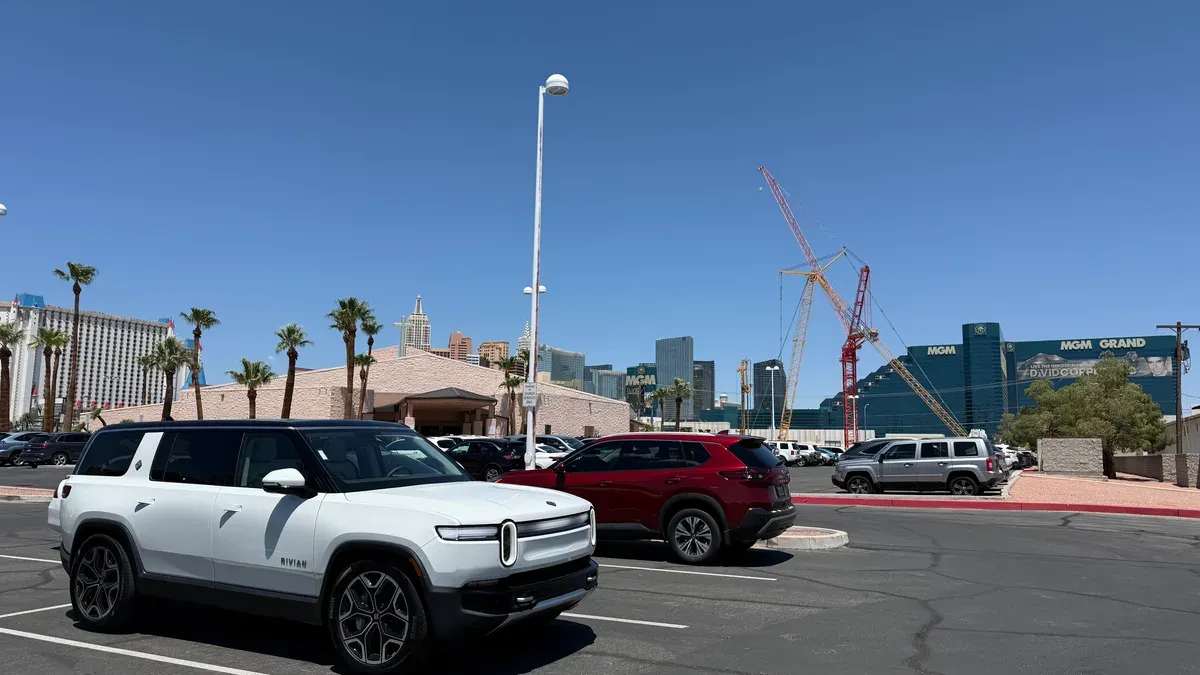
Mom and the Kneel Mode Problem
One thing that came up: kneel mode isn’t enough for my mom. Even at full kneel, getting out is a struggle. I have running boards waiting to be installed, but the R1S was in service and I haven’t had the window to do it yet. That’s getting done soon. For anyone with older passengers or mobility considerations, the running boards on the R1S aren’t optional.
Return: 4% in Barstow
We stopped at Terribles on the way out of Vegas for White Castle. My dad and brother’s favorite, and there’s only one between home and Vegas. The EV chargers at Terribles were dead. CCS port was broken, CHAdeMO screen was off. Not surprising in that heat. Don’t count on those.
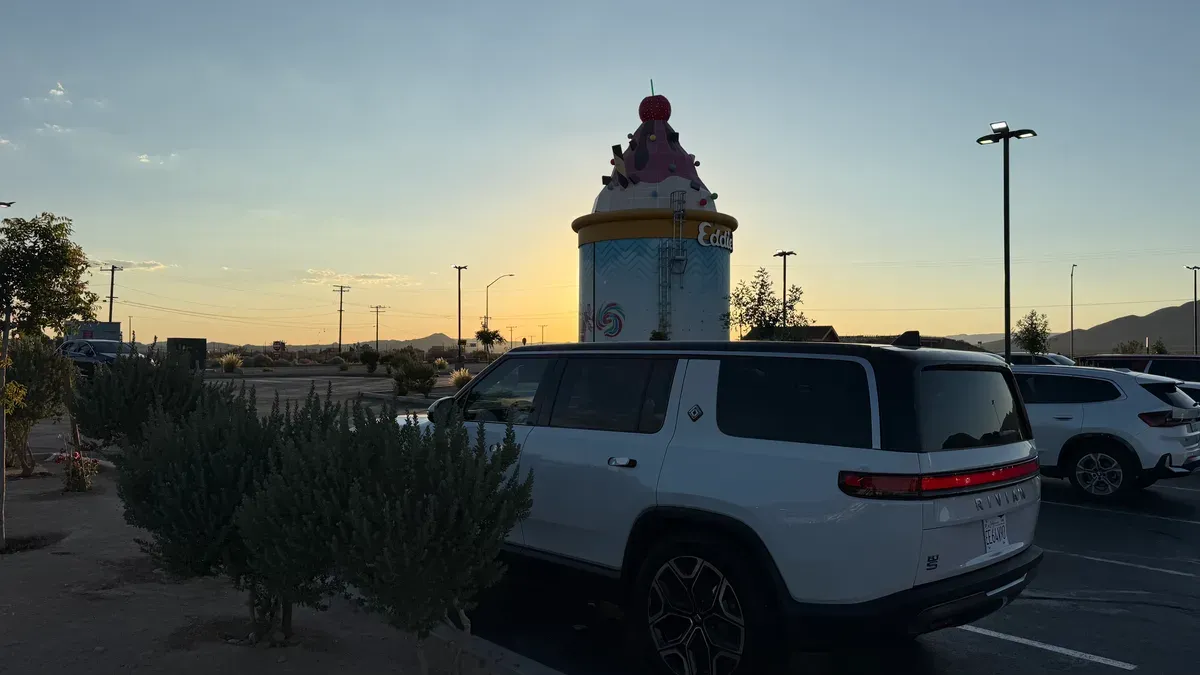
The headwinds from Stateline back were brutal, 25 to 35 mph. I could feel the car rocking, and there was real wind noise in the cabin too. Coming through Yermo, we passed Eddie World.
We arrived at Barstow with 4% state of charge and 15 miles of range. New personal record for cutting it close. The RAN kicked in immediately at 196 kW, cracked 200 shortly after.
How the Numbers Stack Up
At the end of the trip: 518.8 miles, 268 kWh used, 1.95 mi/kWh, 512.8 Wh/mi. That’s worse than either of the two Vegas trips I’m comparing it to.
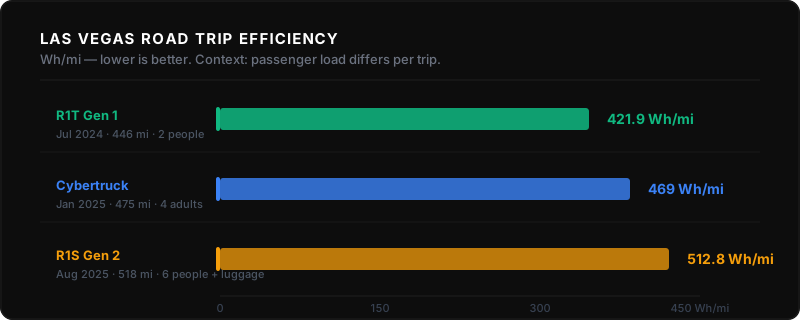
Context matters here. The R1S was carrying six people and multiple bags of luggage. The R1T trip was just me and my gear. The Cybertruck trip had four adults. Load is a real factor.
Cost was high because I charged exclusively on the Rivian Adventure Network at 55 to 61 cents per kWh. With the subscription at $12.99 a month, one trip like this would more than pay for it. Mine was covered by referral credits, so the fuel cost was zero. If you’re getting a Rivian, use a Rivian referral link to get free charging and Gear Shop credits.
Gen 2 vs Gen 1 on Thermals
The Gen 2 large pack is 108.5 kWh versus the Gen 1 large pack at 131 kWh. They shrunk the batteries but kept similar range, mostly through the heat pump and efficiency improvements. But the thermal management on the Gen 2 in extreme heat was worse than what I experienced with the Gen 1 R1T on this same route. The charging speeds at Barstow were comparable in time, because the smaller battery means less to fill. But watching it cut off at 85% due to heat isn’t something I want to do every summer trip.
Rivian recently pushed charging improvements to the Max Pack. I’m hoping something similar comes to the large pack. Whether the architecture is compatible, I don’t know. For everything behind the decision to make this switch in the first place, see why I traded the R1T for the R1S.
More road trips are coming. Winter will tell a very different story.
Leave a comment
Comments come straight to me rather than posting publicly, and I read every one. Your email is never published.