I spent the first part of this Rivian R1S review complaining that Gen 2 charging is a step backward from the Gen 1 R1T. Three hours later the same car pulled 220 kW at 28% state of charge in 113°F heat, with the air conditioning running and me sitting in the driver’s seat. So I get to correct myself on camera, which is the honest way to do this.
This is the 2025 Rivian R1S Dual-Motor Performance, Large Pack, Glacier White over Ocean Coast, on 22-inch wheels. It was delivered June 29, 2025 with 14 miles on it. At recording it had 9,502 miles, which is 425 days and about 22 miles a day. It is the weekend and road trip car, not the daily driver. I came into it from a Gen 1 R1T lease buyout, so everything below is a Gen 1 owner comparing against a Gen 2, not a first-time Rivian buyer guessing.
The charging complaint, and the part where I was wrong
The Gen 1 Large Pack was about 131 kWh. This Gen 2 Large Pack is about 108. Rivian does not publish a usable figure, so treat those as ballpark. My problem was never peak speed. It was sustain. The R1T held 180 to 215 kW for long stretches. This one gets to the same peak and then drops to 140 to 145 kW. On hot road trips it has stopped charging outright, with battery temps around 132°F to 135°F. The R1T never once did that to me.
Then I plugged into a Rivian Adventure Network NACS stall on a 112°F afternoon and everything I just said fell apart:
| State of charge | Speed |
|---|---|
| 25% | 216 kW |
| 28% | 220 kW peak |
| 31% | 174 kW |
| 61% | 105 kW, derate begins |
| 73% | 90 kW |
Ambient was 113°F when it peaked and 116°F when it finally derated. Cabin was set to 74°F with the AC running the entire session, which is exactly what I have spent a year telling people not to do. The screen even told me “charging speed reduced due to cabin and battery cooling,” and it still held over 100 kW at 59%. Before this, 105 kW at 59% was a good day in mild weather.
The receipt is the authoritative number: 71.45 kWh in 36 minutes 17 seconds at $0.53 per kWh, $37.87, waived as complimentary charging. I raised the limit from 70% to 76% partway through, so the session ran longer than I planned.
I do not know what changed. I did not see an update note about charging behavior. I am reporting what the screen showed me on one session, and I am not going to pretend one session is a benchmark. But it was good enough that I had to walk back the complaint in the same video I made it in.
The liftgate is still my biggest problem
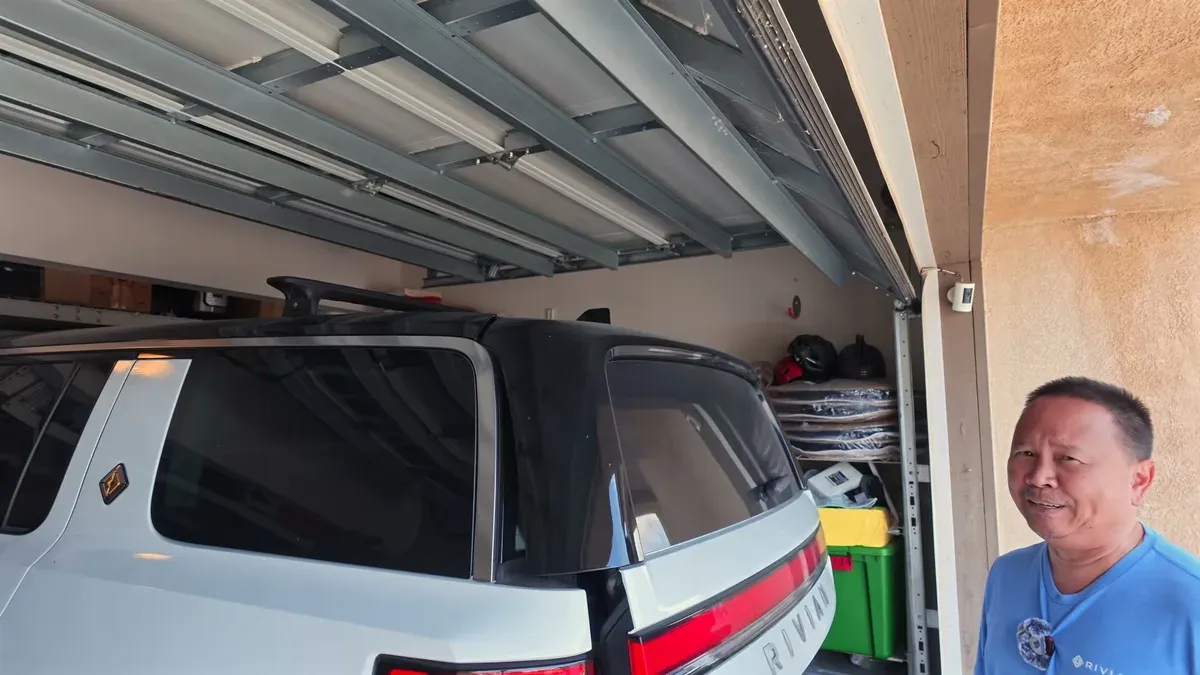
An SUV that starts near $84,000, in my configuration just under $100,000, has a power liftgate with no custom open height. It hits my garage door. There is no hold-the-button-to-set-height trick, because I tried it, and there is no location-based memory either. All three of my Model Ys have both. Tesla added location memory in a software update, so this is not a physics problem.
Rivian has not added it on the R1S in several years, and they did not add it on the R2 either. My workaround is to stand there with my thumb on the button and stop it manually every single time. That is the thing I complain about most, and it is the cheapest thing on this list to fix.
Software that still needs work
Profile loading is a coin flip. I get in, press the brake, and the seat stays in easy-entry position with the seat rail all the way back. The fix is Settings, then Restore. The trap is that Restore and Save sit right next to each other, and I have saved the easy-entry position over my real profile at least twice.
An update also wiped my historical elevation data, including the record below sea level I had carried over from Death Valley in the R1T. Another one froze Trip A and Trip B. I use Trip B as a lifetime counter to match the odometer, and it is now roughly 2,000 miles off with no way to resync it. None of this is dangerous. All of it is annoying on a vehicle at this price.
What it costs to keep
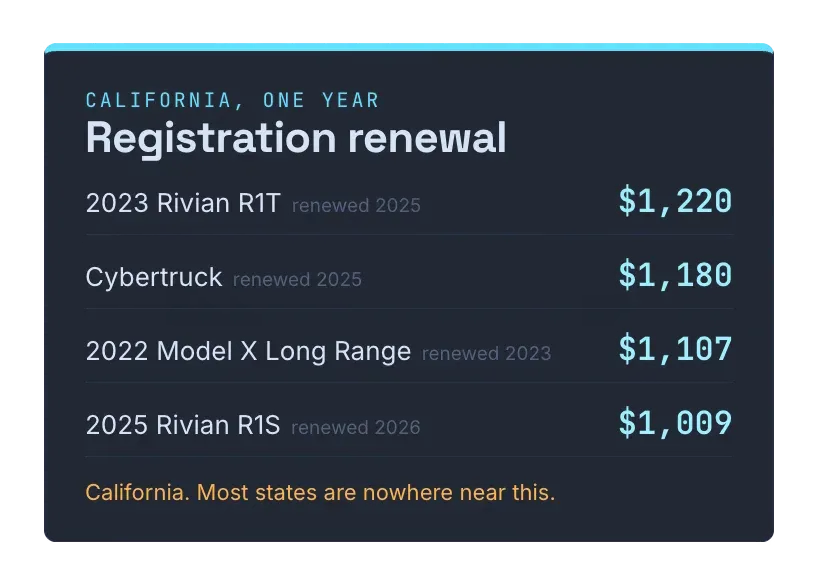
The R1S renewed at $1,009 for one year. The R1T was $1,220. Both trucks land above the SUV because California classes them commercial, and the Cybertruck at $1,180 fits the same pattern. Two things to be fair about: only the R1S figure has a DMV notice behind it, the rest are numbers I have quoted on camera, and these are different renewal years at different depreciation points, so the $211 gap is not purely the weight class. Also, this is California. Most states are nowhere near this.
The rest of the running costs have been mild. Rivian gives you a free wheel alignment inside 12 months or 12,000 miles. Tire rotations go to Discount Tire or Costco, not the service center. Rivian sells a Connect+ subscription at $14.99 a month or $150 a year, which bundles streaming, hotspot, Gear Guard Live Cam, and priority software updates. I stopped paying for it and updates still arrive every month.
Parked drain is genuinely good. Gear Guard costs me about 1% to 2% a day, against 3% to 7% for Tesla Sentry Mode in similar conditions. That is my own observation across parked stints, not a controlled test, but the gap is not subtle on a road trip.
What it costs to buy now
If you are shopping the 2027 instead of reading my ownership story, this is the part that matters. Base R1S Premium is $83,990. The example I configured came to $96,690, and the entire $12,700 difference is two boxes: the 20-inch All-Terrain Dark wheels at $5,700, and the Dual-Motor AWD Long Range pack at $7,000 that you are forced to buy alongside them. The configurator greys the wheel out and tells you “Only available with Long Range.”
That is the part I would push back on hardest. Rivian markets these as adventure vehicles and then puts the all-terrain tire behind a $12,700 gate. Range takes a hit too: Long Range is 410 miles on the standard wheels and 370 on either all-terrain option. My car came standard on 22-inch road tires, which I assume exist to protect the EPA number.
The $7,500 federal new-EV credit expired September 30, 2025, so none of this is offset anymore. Pricing moves, so check it yourself before quoting me.
Autonomy+ is not worth $49.99 to me
Driver+ is standard and included: Highway Assist, adaptive cruise, lane change assist, hands on the wheel. Autonomy+ is the paid tier at $49.99 a month or $2,500 for the life of the vehicle, and it adds hands-free steering on highways and a lot of marked surface streets.
Here is the honest framing. It will not stop for a red light or a stop sign on its own. Lane changes are still driver-initiated: you confirm the lane is clear and flip the signal, and the car picks the gap. That is lane keeping with your hands off, not self-driving. Tesla FSD does more, and it also parks itself in the fast lane at 72 mph in California and makes me take over. Driver+ holds a lane reliably and leaves the lane changes to me, which is what I actually want, and it costs nothing extra.
What the R1S genuinely solves
We came to the Model X from minivans expecting a minivan replacement, and across two of them it was the worst one I have owned. No AC outlets, and constant compromise on cargo. The R1S fixes both. We fold one side of the split third row and fit the cooler, the electric fridge, and full-size suitcases while still seating five or six. Unlike the Model X, you can put a roof rack on it, and the trailer hitch is standard.
The third row is real. KobraToldYa at 6’0” and Butter EV at 6’2” both sat back there without complaining. That is what lets me take my parents on road trips.
A few more that hold up after 14 months: the axle disconnect and reconnect in All-Purpose mode is drastically smoother than the Gen 1, where you felt a shudder when the rear axle re-engaged under load. The front passenger seat still has power lumbar, which Tesla deleted from the Model X. Air suspension auto-leveling for camping is the feature I did not expect to care about and now would not give up. Matrix headlights, dual screens, Sport Mode down the canyon from Big Bear, and off-road modes that work on all-season tires all earn their keep.
And I have to say it plainly: this has been the least problematic vehicle in the fleet. Two service visits in 14 months, and really only one repair. The first was post-delivery alignment and fitment plus a charge port that would not unlatch after charging, at home or at a Supercharger, which took a soft reset of the vehicle to release the cable. The second was after a camping trip when I thought the battery was draining oddly, and they found nothing wrong. Compared to the Cybertruck and the Model Y, that is a quiet 14 months.
Would I buy the R1S again
Absolutely yes. It is not perfect, and I just spent most of this post on the parts that are not, but it is the balance I want: a traditional SUV that happens to be electric, with character and real utility. Against the Kia EV9, the Lucid Gravity, and the Model X, the seven-seat layout plus the cargo flexibility is unmatched for what my family does.
Would I trade for an R2 or a 2027? No. The R2 has no third row and no air suspension, and the 2027 changes are not worth a trade out of a Gen 2. The one recommendation I will attach: only buy a Rivian if you have a service center you can actually get to.
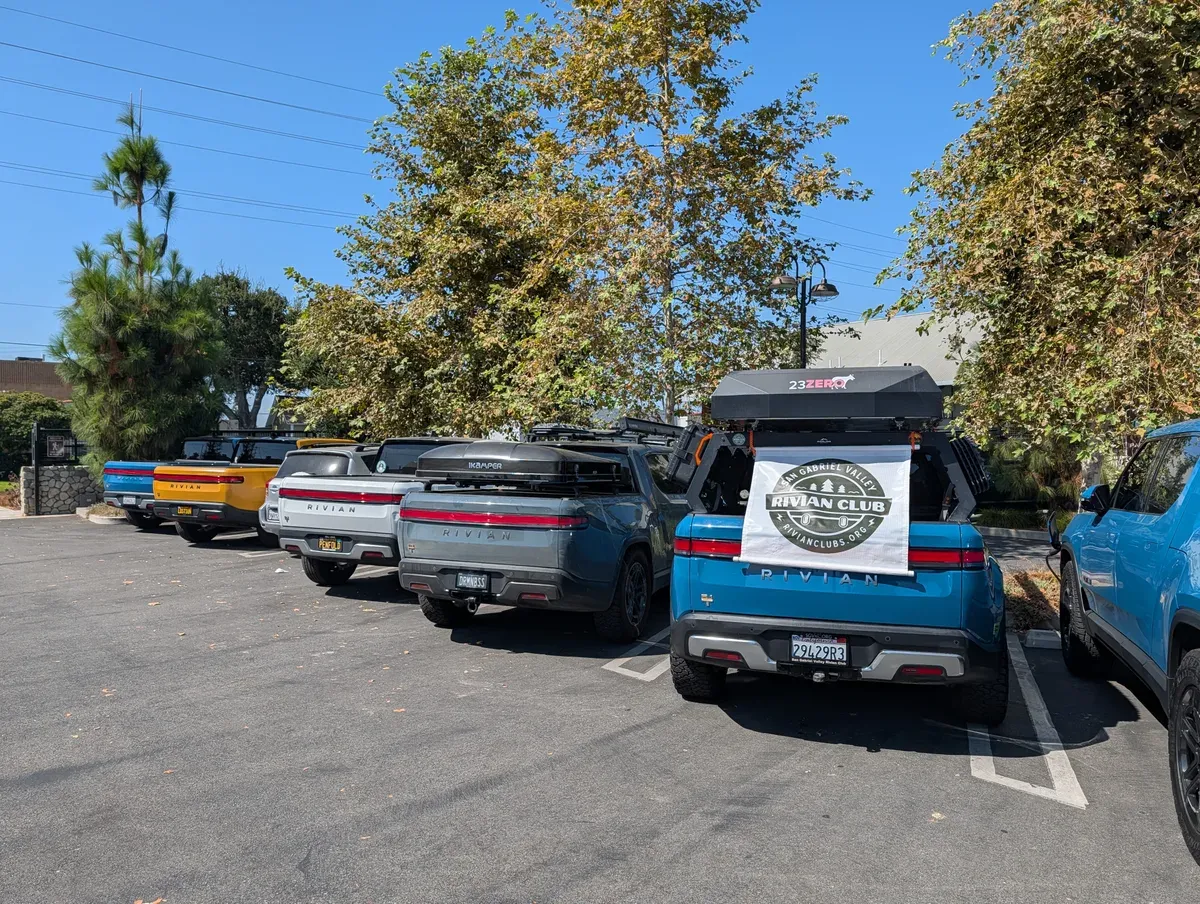
The last thing, and it is the one nobody puts in a spec sheet. Joining the local Rivian club turned group trips, off-roading, and camping into something I show up to instead of plan. Routes and charging stops are handled before anyone leaves the house.

If you are buying your first Rivian, my referral code is in the description of the video. And if you want the two-month version of this car before any of the above had time to settle, that writeup is here.
Leave a comment
Comments come straight to me rather than posting publicly, and I read every one. Your email is never published.