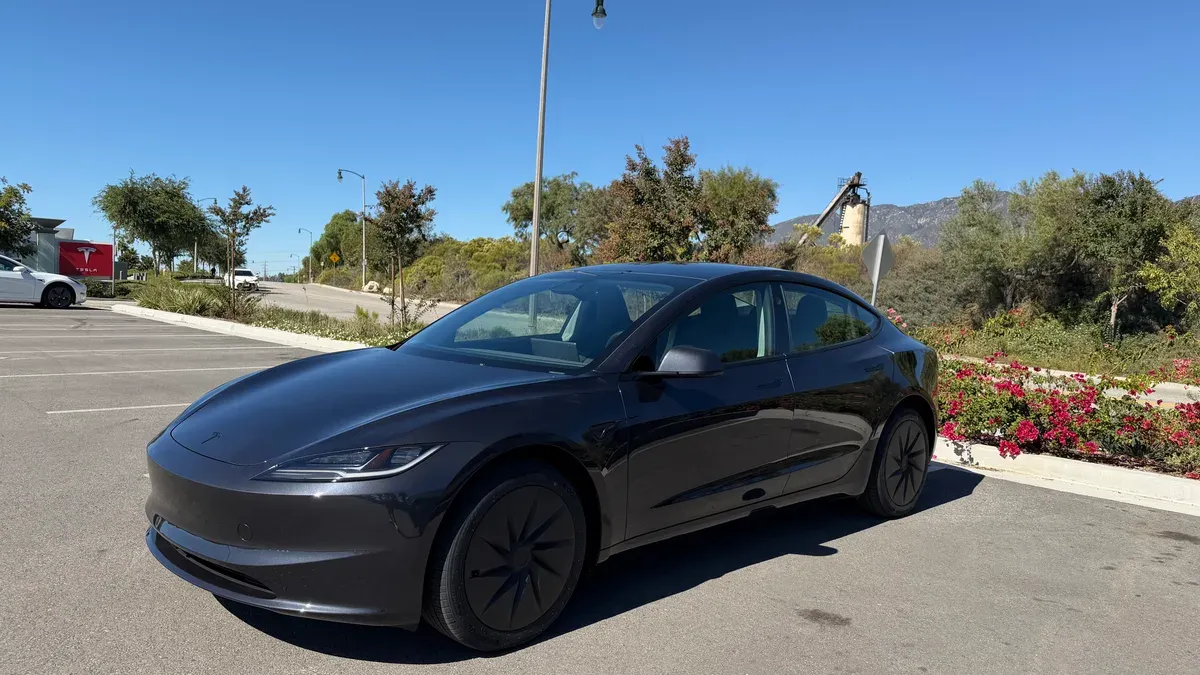
The sound system in this car should not sound as good as it does. That’s the thing I keep coming back to. I tested this Model 3 Standard RWD the same day I had the Cybertruck RWD. Two of Tesla’s entry-level rear-wheel drive vehicles, back to back. The one that surprised me most wasn’t the one I expected.
Exterior: Blacked-Out Everything
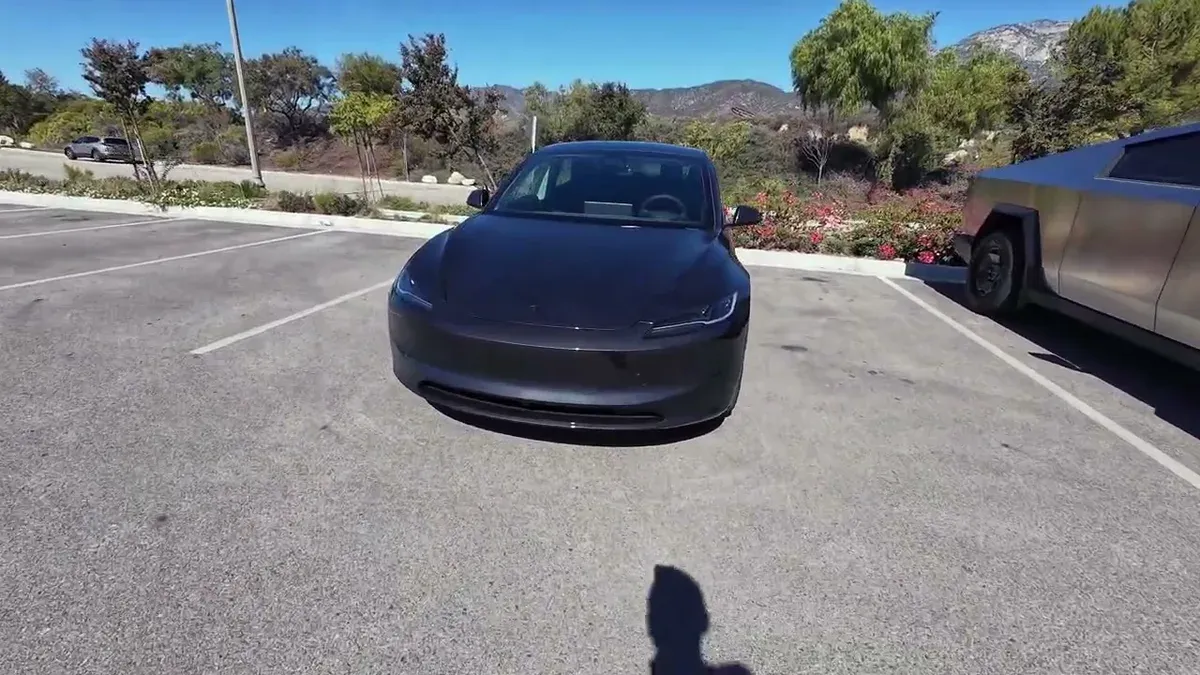
The Standard trim comes with blacked-out Tesla badges front and rear. Not exclusive to Standard. The Premium versions get them too now. I’m fine with it. I wish Tesla had removed the hood logo entirely like they did on the Model Y Juniper, but at least it’s not chrome.
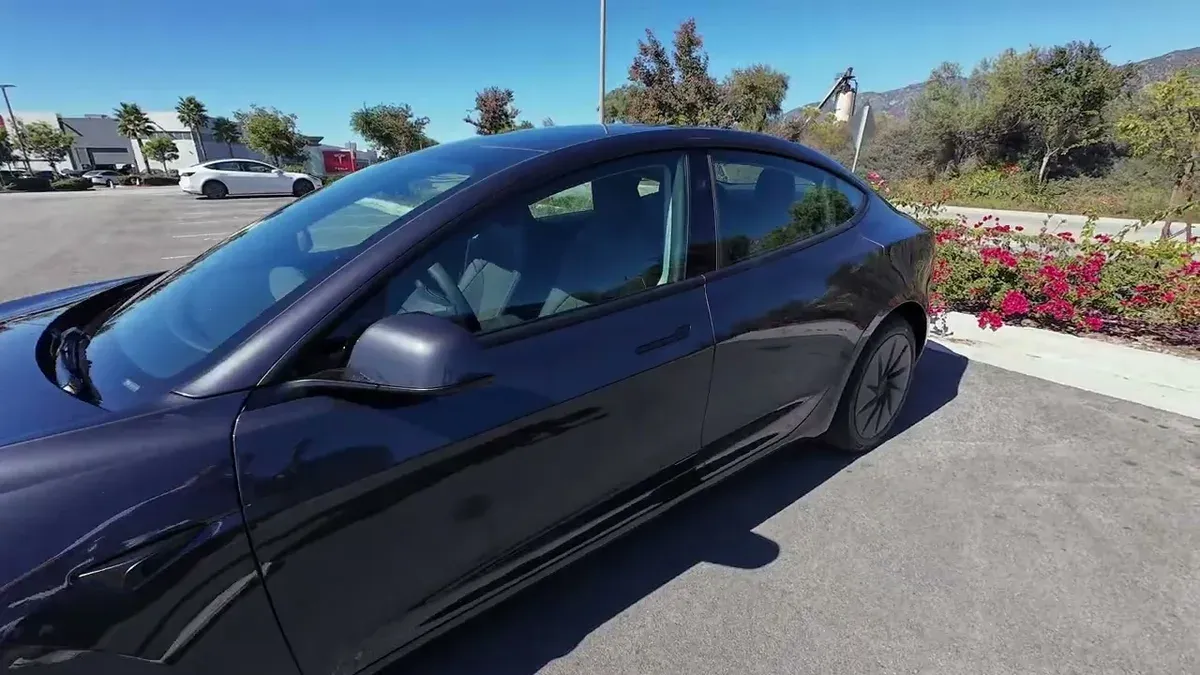
Wheels are 18-inch with Hankook Ventus 235/45s. The valve stem is accessible through the cover, which is worth knowing before your first tire top-off. Glass roof is here, same as Premium.
Interior: One Annoyance Worth Knowing
The seats are a mix of vegan leather and cloth, with more vegan leather than the Cybertruck RWD, which goes heavy on the cloth. The Cybertruck’s material split is more dramatic. This feels closer to a standard Tesla interior.
The on-screen seat controls are the one thing that’ll take adjustment. No more physical buttons on the seat sides. You tap the shortcut on the screen, navigate with the scroll wheel to highlight the adjustment you want, then press left or right to change it. It works, but it’s slower than reaching down and grabbing a physical control. Not a dealbreaker since you’re rarely adjusting seats while moving, but worth knowing before you sit down expecting the old setup.
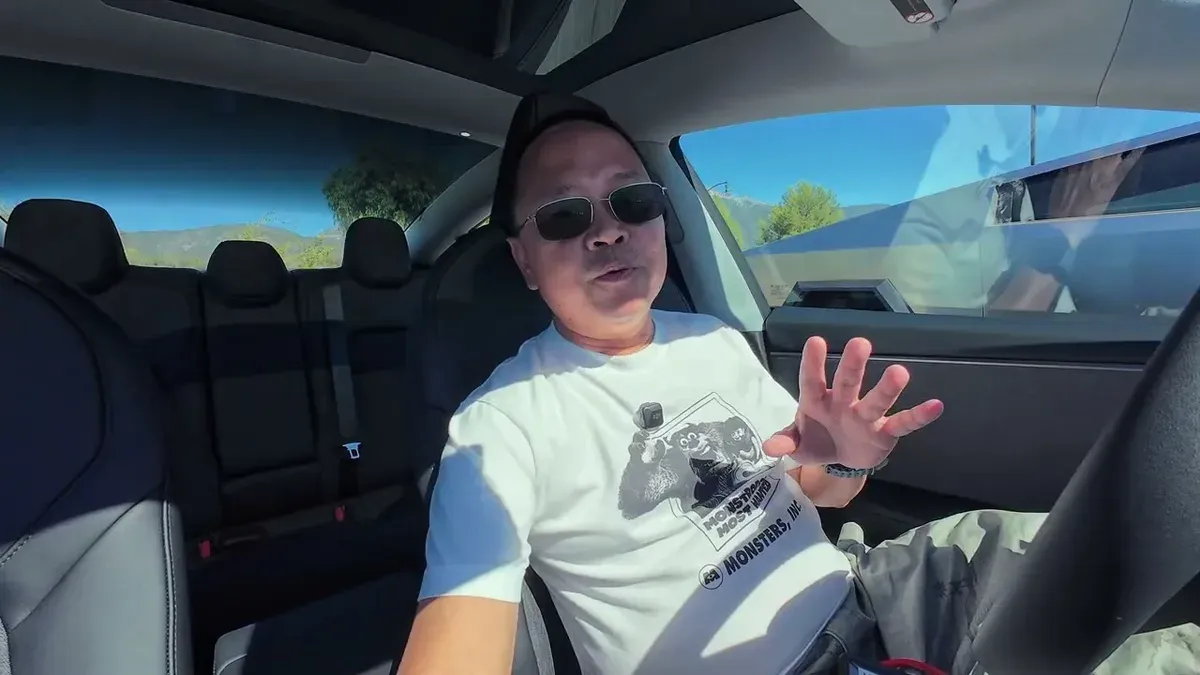
Turn signal stalks are back. Good. Muscle memory matters when you’re switching between multiple cars.
Driving It: Freeway, Streets, and Suspension
RWD. Not Dual Motor, not Performance. If you’ve never driven a Tesla, you’re going to be impressed. If you have, it still has good pickup at highway speeds, enough to change lanes or overtake without thinking about it. By 60 mph, acceleration is still there.
Cabin noise is quieter than I expected for Standard. Not as quiet as my Juniper Dual Motor, not close to a Model X or R1S. The Cybertruck is hard to compare since it’s running all-terrain tires. Suspension felt similar to my old 2022 Model Y Performance: stiffer, but not uncomfortable. The Standard doesn’t have frequency adjustments like the Premium, but I wouldn’t call it worse. More like “comparable to where Premium used to be.”
FSD on Hardware 4
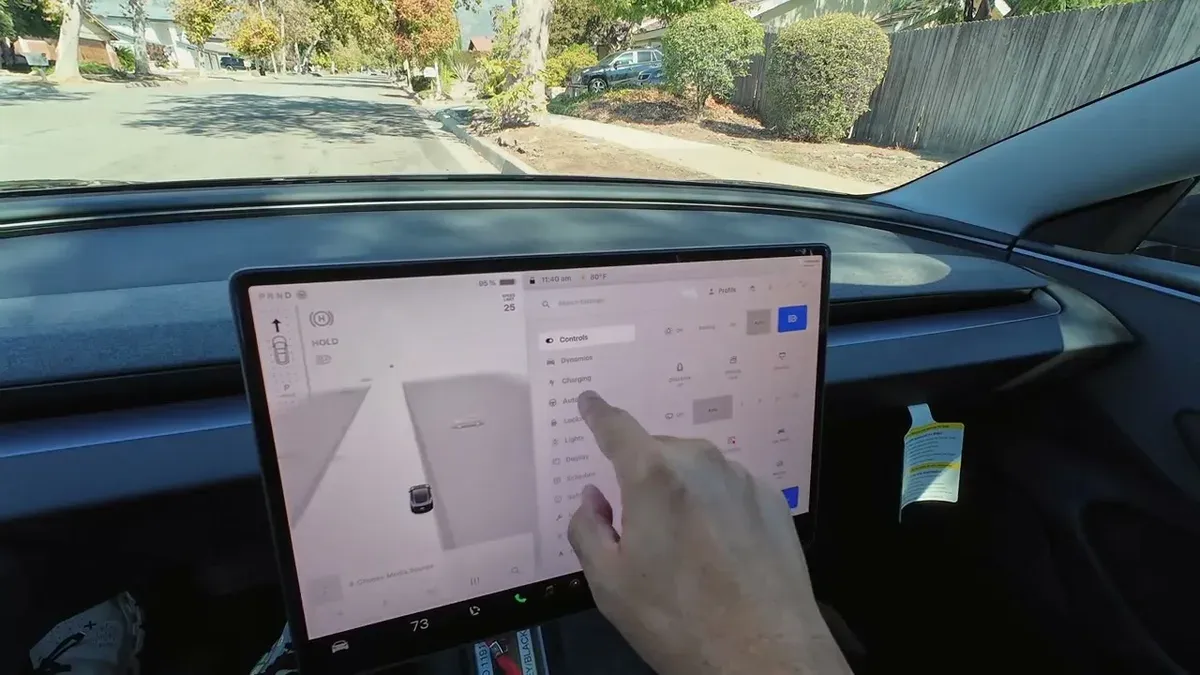
Standard gets FSD capability. Same hardware as the Premium, same version (v13.2.9 here), same functionality. HW4 is in all recent Teslas: Cybertruck, Model S/X refresh, the Highland Model 3, and the Juniper. No features are locked behind trim level. What matters is your hardware version.
The FSD experience on this car felt identical to what I get on the Juniper. Unprotected lefts, lane changes, street navigation. Smooth. I’m becoming a believer, and V14 is supposed to be even better. The one Tesla where FSD still needs real work is the Cybertruck. That one has a separate set of problems.
What Standard Actually Gives Up
Most of the Standard vs Premium debate online focuses on price, but here’s what the experience difference actually looks like:
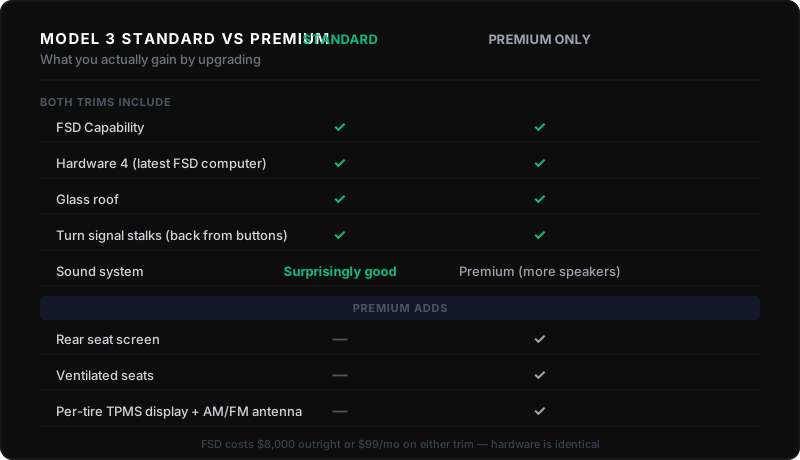
The rear screen is the easy one to dismiss. Abby and I have kids, and they use their own devices regardless of what screens are in the car. The ventilated seats I’d genuinely miss in SoCal summers. Per-tire TPMS readout is one of those features that once you have it, it’s hard to go back. The radio antenna is gone, which means no AM/FM. Apps can fill that gap but it’s a real cut.
FSD costs $8,000 outright or $99 a month on either trim. That’s consistent.
The Sound System
No radio antenna meant I paired my phone via Bluetooth and ran the official sound system test, which is “A Milli” by Lil Wayne. I can’t play it in the video, but I’ll tell you what happened: this car does not have a subwoofer. It’s not supposed to have a complete audio setup. And it sounded better than the Rivian R1S with the premium audio upgrade.
I’m a Rivian owner. I have the Gen 2 R1S with the premium audio option. It is not close. The Model 3 Standard is better. That’s not what I expected to be writing about this car.
Should It Be Cheaper?
Most of the “price isn’t low enough” noise is coming from existing Tesla owners. My question is what a first-time buyer thinks. At roughly $19 per month per $1,000 financed, being $2,000 to $3,000 cheaper than the Premium RWD is $40 to $60 off your monthly payment. That amount matters to a lot of buyers.
This is the iPhone SE play. It’s the gateway. You get into the Tesla ecosystem, the Supercharger network, the OTA updates, FSD capability. All the core stuff, at a lower cost. Next car, you probably go Premium. That’s by design, and it works.
If I were buying a first car for my son, this is the conversation I’d be having. That’s a real endorsement.
If you’re ordering, use a Tesla referral link. We both get credits out of it. For the full picture on how this car compares to its stablemate, see my Cybertruck 20,000 mile review for where the RWD platform goes at the other end of the lineup.
Leave a comment
Comments come straight to me rather than posting publicly, and I read every one. Your email is never published.