This product was sent by Hansshow at no cost for review. My opinions are entirely my own.
When Hansshow reached out about their GaN console hub for the Model Y Juniper, I had actually already been reading about GaN technology on my own. So yes, I said yes, but I genuinely wanted to test it, not just use it.
The case for GaN in a car charger is more compelling than it sounds on spec sheets. The center console is a sealed, warm space. Traditional silicon-based chargers have to be bulkier to handle heat. Gallium nitride switches faster and wastes less energy as heat, which means you can push real wattage out of something very thin without it cooking in there. That’s the whole pitch.
What the Hub Actually Does
Three USB-C ports, two of them retractable cables. C1 tops out at 60W: genuine Power Delivery with a 20V/3A rung that can run a MacBook. C2 is 30W. C3 is an open port; you supply your own cable, also 30W. The whole thing runs off the center console’s cigarette lighter port and the product listing confirms it supports up to 16V input for the Juniper’s electrical system.
One thing to understand before buying: the power splits under full load. Two ports at a time hold their rated wattage: 60W + 30W runs fine. Load all three and C1 steps down to 45W, C2 stays at 30W, and C3 drops to 22.5W. Total throughput is still 97.5W across three devices, which is legitimately useful, but if you want the 60W cable running at full speed, keep it solo or paired with one other device.
Install: Two Minutes, Done
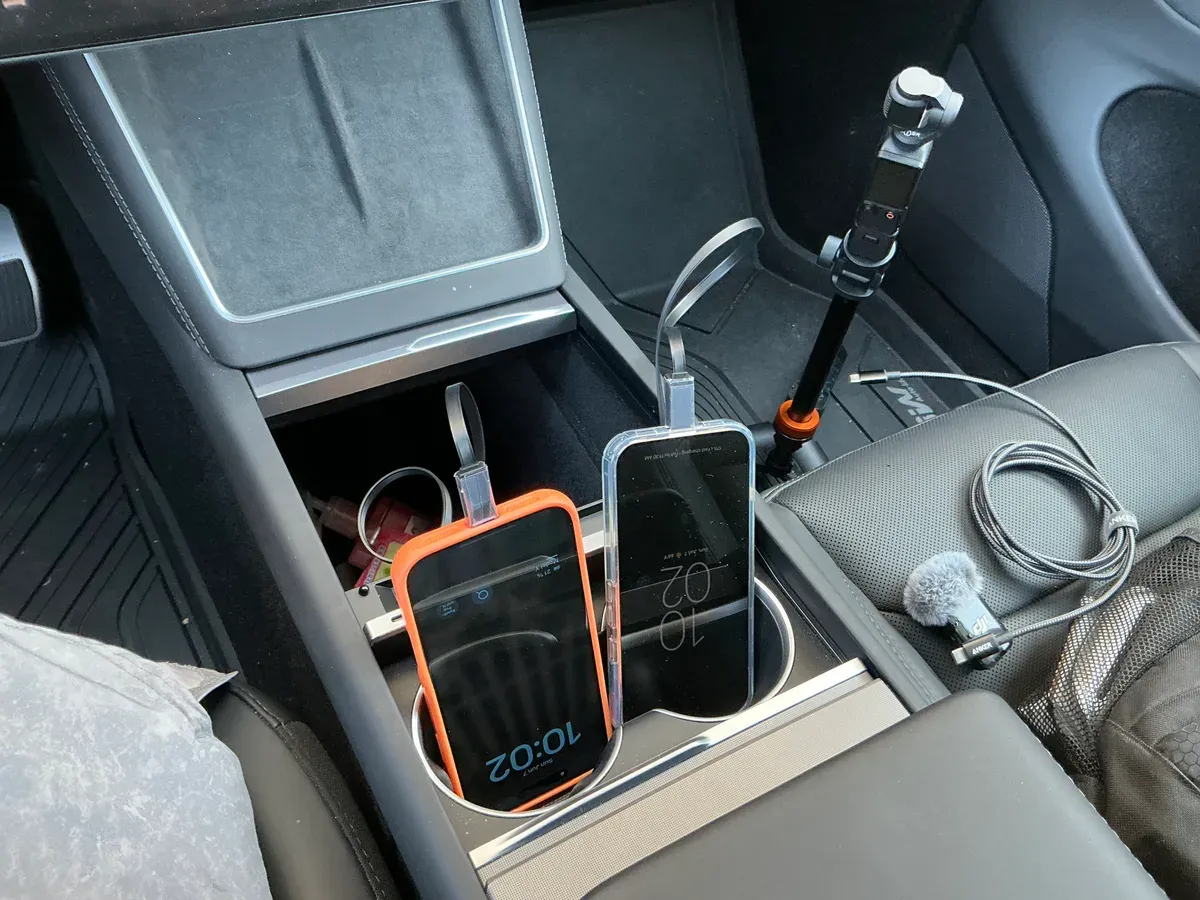
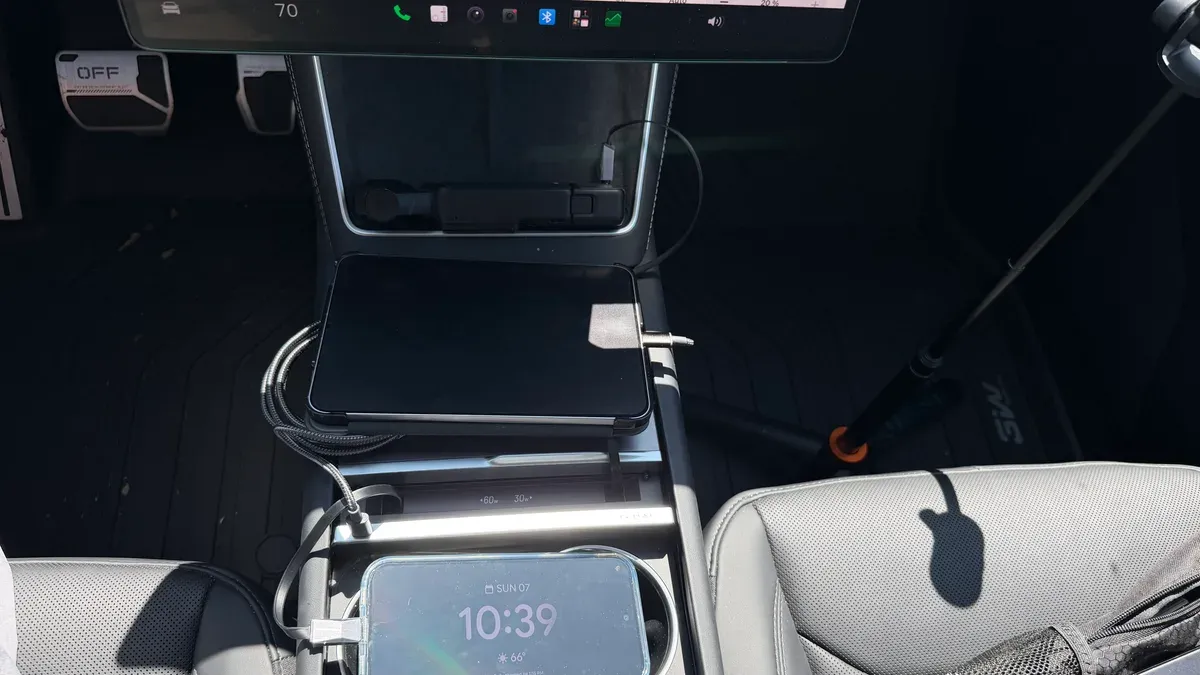
The unit slides into the rails on the side of the center console and sits flush next to the cup holder. The silver trim matches the Juniper’s interior accents without looking aftermarket. When you close the lid, the hub tucks away; two small protrusions on the cable exits keep the lid from fully sealing over the cables, which is by design.
Retractable cables extend to about 29.5 inches, long enough to reach past the rear LCD display if back-seat passengers want a port. The retract tension is solid; they don’t flop around loose.
The Live Drive Test
I loaded it up for a Supercharger run. iPhone 17 Pro Max on C1, Google Pixel 10 Pro on C2. Two ports active means full rated wattage on both.
Starting state of charge: iPhone at 46%, Pixel at 17%.
Seventeen minutes later at the Supercharger:
- iPhone 17 Pro Max: 46% → 75% (+29%)
- Pixel 10 Pro: 17% → 48% (+31%)
Those are real-world numbers from a 17-minute drive. By the time I had the car plugged into the Supercharger, the iPhone was already at 78%. The cables reach comfortably to the tray area so neither phone needed to sit in the cup holder to charge.
Worth It for the Model Y Juniper
This fills the gap the Juniper leaves with its built-in wireless pads: those max out at 15W and run hot. If you’re regularly charging a phone plus a tablet or running two phones like I do, having dedicated USB-C ports with real wattage matters.
The only genuine caveat is the three-device power split. If you’re planning to use all three ports simultaneously, go in knowing that C1 drops from 60W to 45W. Still fast, just not max-speed.
I’ve been running Hansshow accessories on the Juniper since the Power Frunk install, and the pattern is consistent: good fit, honest specs, no surprises. The GaN hub is no different. Plug it in, slide it into the console, and you’ve got 60W in a 0.35-inch form factor that doesn’t overheat in a sealed space. That’s the GaN promise, and this one delivers it.
Check out the full Hansshow lineup for Tesla and Rivian if you’re building out your Juniper. Worth a browse.
Let me know what you think in the comments. Are you running multiple devices in the car, or is one port enough?
Leave a comment
Comments are moderated, so it may take a bit before yours appears. Your email is never published.