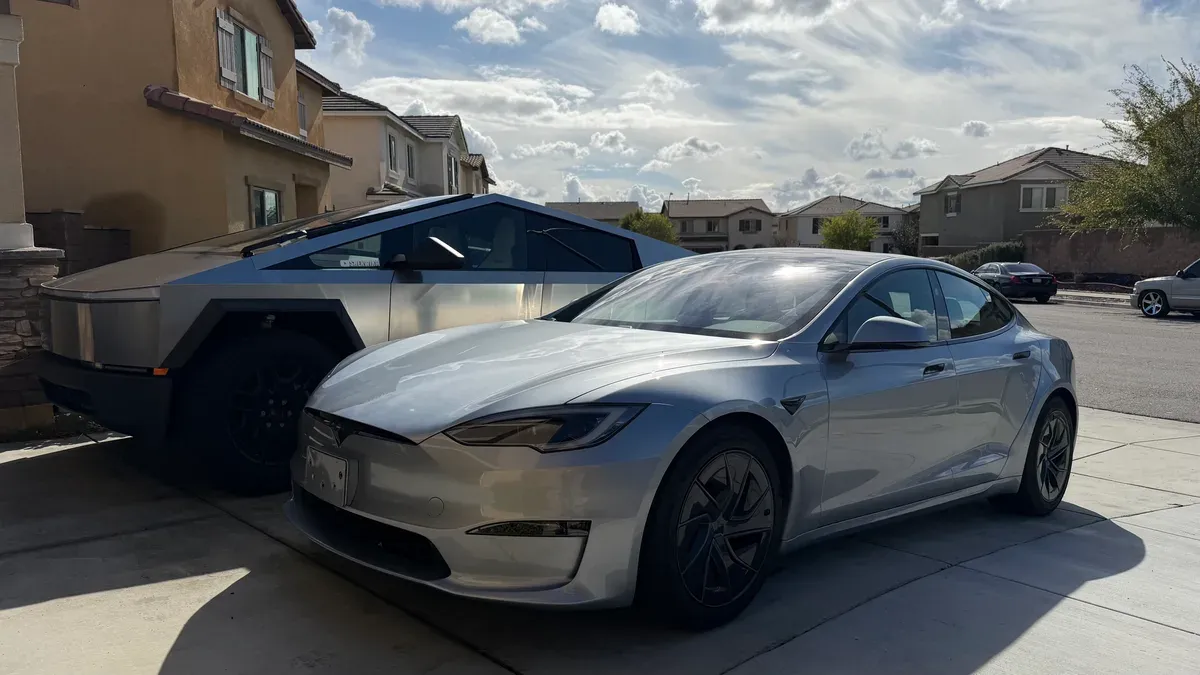
My Model Y was in service, and Tesla handed me a 2026 Model S Long Range as a loaner. Brand new: 103 miles on the clock, FSD v14.1.7 freshly installed. I’d driven a 2018 Model S loaner before, but this was a different level. I used it for my daily commute for a few days and ran it through a full luggage test to see if our family of five could realistically road-trip in it. Here’s everything I found.

First Drive and FSD v14.1.7
The drive is genuinely smooth. Softer than the Model Y Juniper, and you can dial it in further with the adaptive suspension (Comfort or Sport mode). Active noise cancellation keeps the cabin quiet in a way the Model Y can’t match. This is basically a Model X in sedan form, which is either a selling point or a dealbreaker depending on how you feel about getting in and out of a low car.
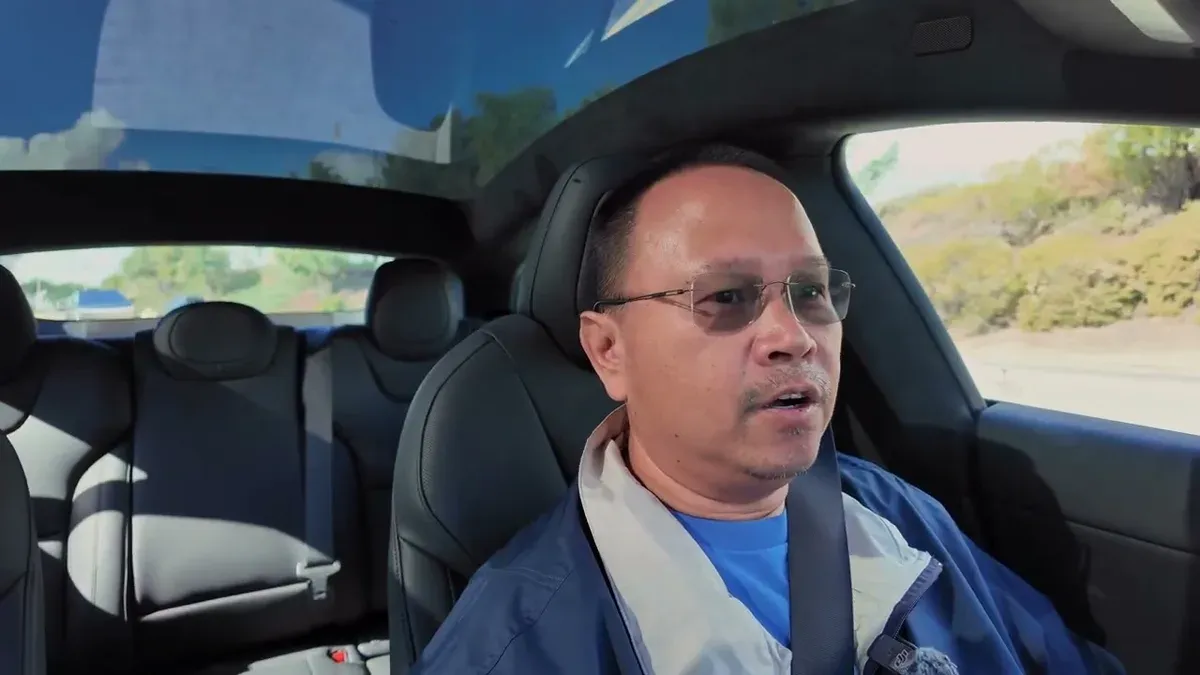
FSD handled construction zones well: detected a closed lane ahead and stayed in the correct lane even though the arrows suggested otherwise. Lane-change behavior was more hesitant than I expected: the car would flip the signal, see a car a comfortable distance back, and just sit there instead of committing. Compare that to my Model Y, where FSD felt more decisive.
One real issue: the car sits low, and FSD doesn’t account for that. Driving out of parking lots with any kind of dip or bump will scrape the front lip. It happened two or three times. If you get one, disengage FSD before any uneven exit.
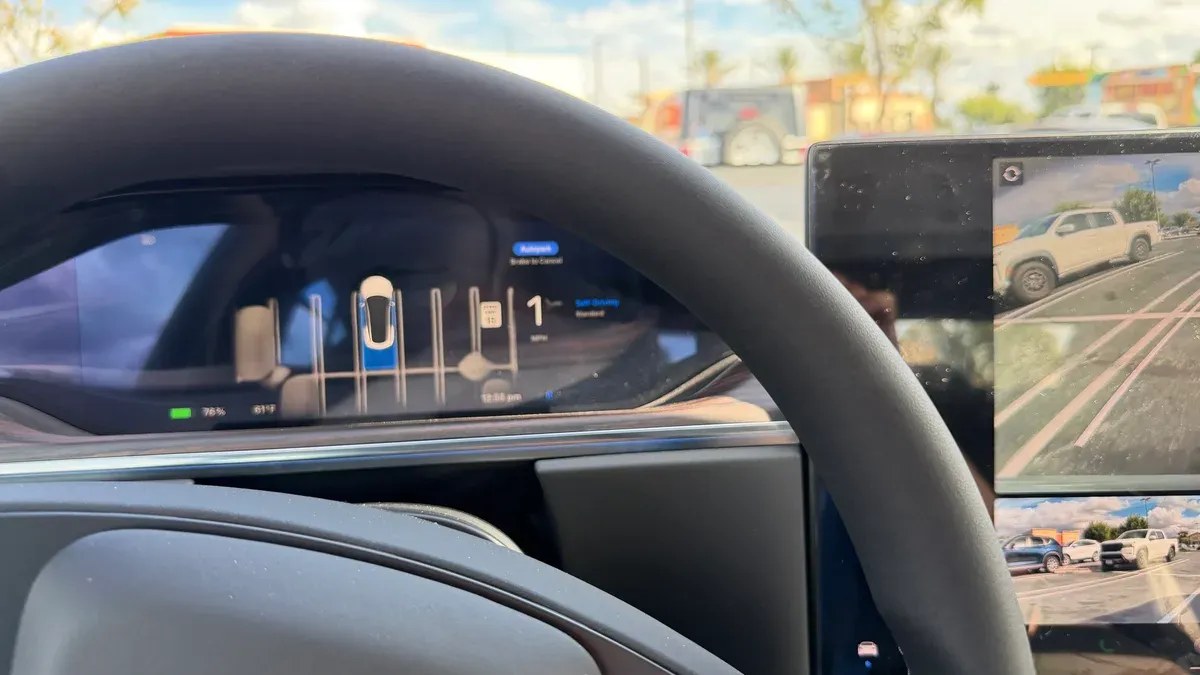
The dual-screen setup (instrument cluster behind the wheel plus the large center display) looks premium but the UI feels cluttered to me. The instrument cluster gets partially blocked by the steering wheel when you’re in a natural driving position, and the turn-signal camera feed has a vignetting effect I don’t like. Rivian’s square camera frame is cleaner. The big screen tilts, which I actually appreciate more now than I did on our old Model X, but overall I think the single-screen layout in the Cybertruck and Model Y is better organized.
Also: touch-capacitive steering wheel buttons. Still there. Still bad.
Trunk Space Is Legitimately Impressive
This is where the Model S surprises people. The trunk is large, comparable to what you’d see in a Lucid Air, and noticeably bigger than a Model 3. The privacy cover is a huge upgrade over the Model Y Juniper version too; it snaps in with magnets, folds flat, and doesn’t scratch your cargo area every time you use it.
I ran a real-world Vegas-trip simulation with our actual gear: one large suitcase (our family shares one for packing efficiency), a cooler, a carry-on, and a folding cart. Everything fit with room for backpacks alongside. The sub-trunk underneath the floor holds the mobile connector. It closes. I was surprised.
What doesn’t fit the premium narrative: the rear seats aren’t powered. The Model Y, a less expensive car, has powered rear seats. On a flagship sedan that starts at $74,990 new, that’s an oversight. There’s also no 120V outlet. Tesla’s only EV with an outlet is the Cybertruck. That limits what you can do on a road trip compared to what we’ve gotten used to with the Cybertruck and the Rivian.
The Frunk Situation
No powered frunk. Same complaint as the Model X: the gas struts are right there, it would be a straightforward addition, but Tesla hasn’t done it on the premium lineup. The Cybertruck has it. The Model Y Juniper can be added aftermarket.
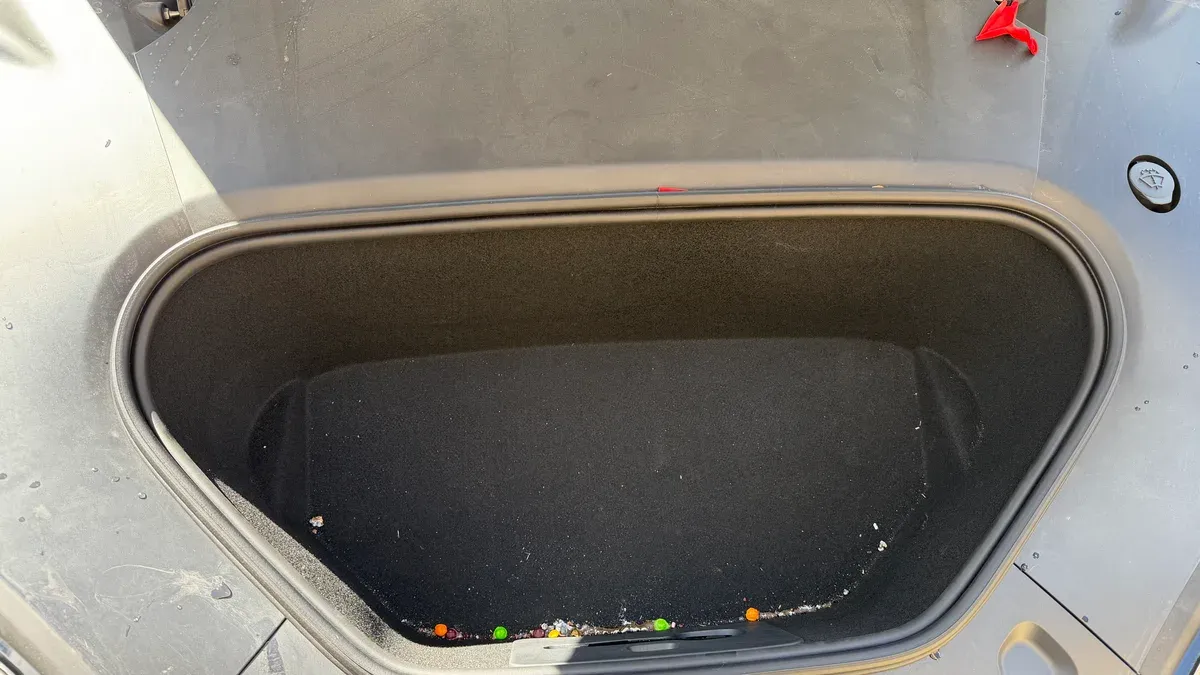
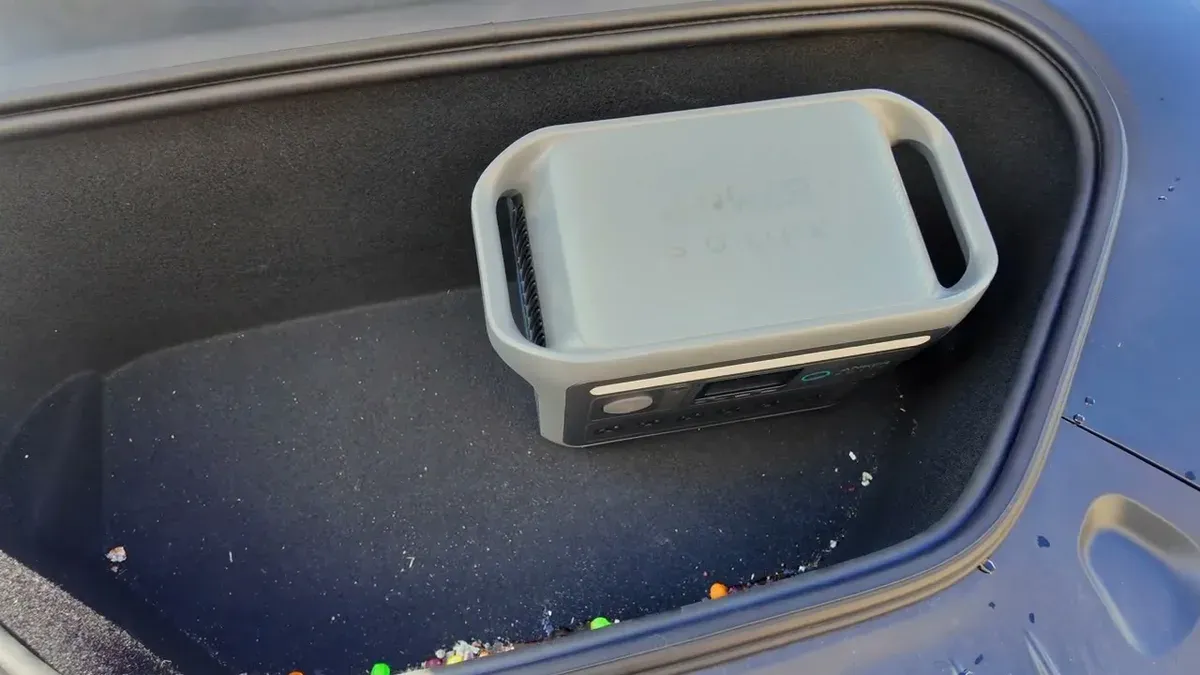
The loaner frunk had been left dirty by the previous driver. Literal melted candy on the carpet. Not on Tesla, that’s on whoever returned it. I eventually got past it and tested whether the Anker Solix C1000 would fit. It does, with room for a backpack alongside it.
Rear Seating
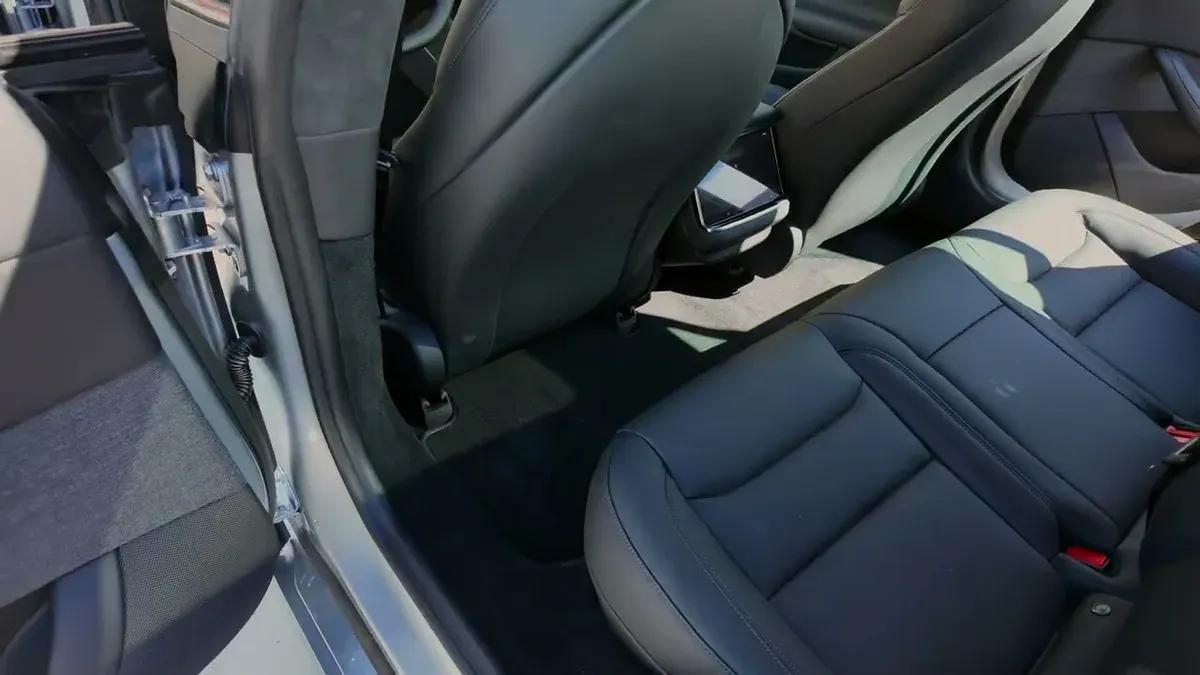
Legroom is plentiful for five adults. The panoramic glass roof runs front to back without the divider you get in the Model 3 or Model Y. It makes the cabin feel noticeably more open. There’s a rear entertainment screen now, which my kids would use. Headroom is fine despite the lower roofline.
Efficiency Numbers
Over 138.2 miles in Comfort mode with SoCal stop-and-go traffic: 31.3 kWh used, 226.8 Wh/mi. That’s efficient. For comparison, the Cybertruck on city driving rarely dips below 400 Wh/mi. The Model S Long Range EPA range is 405 miles, and driving like this, you’d get close to that.
Would I Buy One?
Not new. The depreciation on the Model S is brutal right now. But the used market is interesting: previous-gen Model S Plaids are floating around $50K–$60K with reasonable mileage. The generation before that (roughly 2017–2021) can be had around $30K–$35K, and those are genuinely good cars.
This generation has two refreshes; the latest added a front camera. For what you get (ride quality, range, FSD, interior space), it’s hard to argue against it as a sports sedan. It just can’t compete with the Model X or R1S for family utility, and I’m past the point where raw speed is a reason to buy a car. Same conclusion I landed on after living with the Model X Plaid. New pricing changes periodically. Check Tesla’s site before you shop.
The Model S is the best sports sedan available right now. FSD alone puts it in a different category from anything else on the market. I just wouldn’t buy one new. If you’re in the market, use the Tesla referral link when ordering. The offer changes periodically, but it’s usually free Supercharging miles or an FSD trial.
Leave a comment
Comments come straight to me rather than posting publicly, and I read every one. Your email is never published.